Download CATS: Crash Arena Turbo Stars MOD Quick
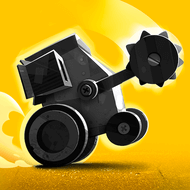
*CATS: Crash Arena Turbo Stars* is a free-to-play multiplayer fighting game developed by ZeptoLab. The core concept requires players to engineer custom combat vehicles from collected parts. These machines compete in automated, physics-based Player-versus-Player battles, where victory is determined by the superiority of the machine’s design rather than by real-time player input.
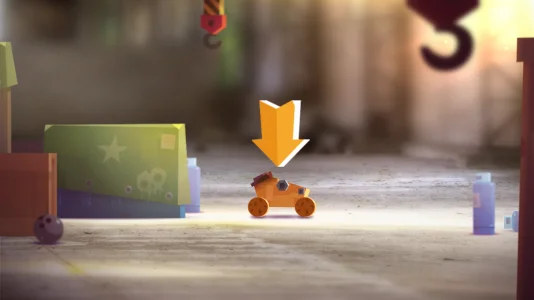
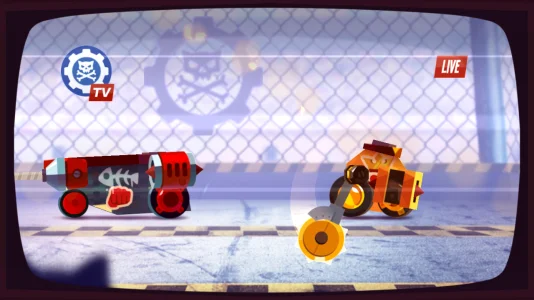
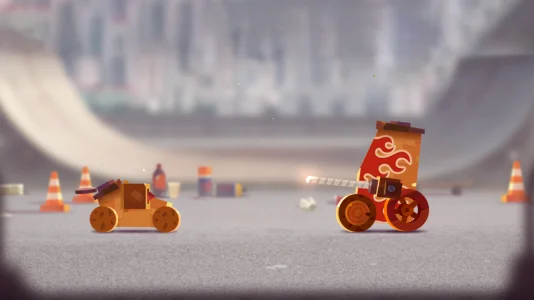
Screenshot Gallery
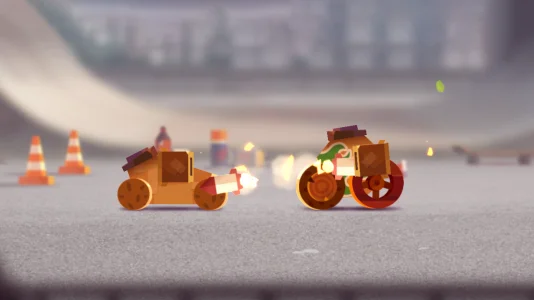
Game Overview
An Analytical Overview of CATS: Crash Arena Turbo Stars
CATS: Crash Arena Turbo Stars presents a unique hybrid of the Fighting and Multiplayer genres, initially launched for mobile platforms on April 19, 2017. The game was developed by ZeptoLab, a studio widely recognized for its successful Cut the Rope intellectual property. The core concept of CATS centers on asynchronous Player-versus-Player (PvP) combat, where outcomes are determined not by real-time reflexes but by sophisticated vehicle engineering. Players assume the role of feline engineers, tasked with constructing powerful, automated war machines from a diverse collection of parts. These creations then engage in 1v1 physics-based battles, where superior design and structural synergy dictate victory. The distinctive thematic choice to feature cats as pilots was a strategic decision made late in development to provide a relatable character element beyond the "soulless chunks of metal" that constitute the fighting vehicles. This formula proved immensely successful, as the game registered over 8 million downloads in its first weekend and surpassed 60 million downloads within four months of its 2017 release.
Intellectual Property Transition and Publishing History
The operational stewardship of CATS: Crash Arena Turbo Stars experienced a significant shift in January 2025. ZeptoLab, the original developer, executed a sale of the game's intellectual property rights, along with those of its other title King of Thieves, to Nazara Technologies. This acquisition, valued at US$7.7 million, transferred all ongoing publication and development responsibilities to the Nazara Publishing division. For the player base, this transition is a critical contextual factor. Nazara Technologies' substantial financial investment signals a strategic imperative to generate a return, which may influence the game's economic model. Players, particularly those progressing through the free-to-play (F2P) path, should anticipate a potential intensification of monetization mechanics, which have historically been critiqued for fostering a "pay-to-win" ecosystem.
Core Gameplay Mechanics and Progression Loop
The Foundational Build-and-Battle Cycle
The gameplay of CATS is constructed around a compelling and iterative F2P loop designed for sustained engagement. This cycle begins with the collection of spare parts, which are primarily acquired by opening time-gated boxes earned from battle victories. These components—chassis, weapons, and utility gadgets—form the building blocks for the design phase. In this stage, the player acts as an engineer, strategically assembling a combat vehicle while managing critical constraints like energy allocation, weight distribution, and synergistic part placement. Once designed, the machine is deployed into automated, physics-driven battles against the creations of other players. Success in these engagements yields progress, allowing players to ascend the leaderboards of the World Championship stages, which in turn unlocks access to more powerful content, including the highly coveted "Ultimate Parts." While the game emphasizes outsmarting opponents through superior design, a player's engineering capabilities are fundamentally constrained by the parts they have collected through the randomized loot box system.
Machine Construction and Strategic Components
The vehicle engineering system is based on three primary component categories. Bodies, or chassis, establish the machine's foundational statistics, including health, total energy capacity, and its physical silhouette, with types like Classic, Titan, and Boulder offering distinct tactical advantages. Weapons provide the offensive capabilities, ranging from close-quarters options like the Chainsaw and Drill to ranged armaments such as the Rocket and Laser. Finally, Utility Gadgets offer specialized enhancements that can augment mobility or disrupt opponents, with key examples including the Forklift and Repulse. Progression is tied to the World Championship, a linear series of stages that culminates in high-tier competitive divisions. Veteran players who reach the final stage can enter Prestige Mode, a system that resets currency and parts in exchange for permanent bonuses, creating an indefinite endgame loop characteristic of modern F2P design.
Competitive Game Modes and Multiplayer Structure
World Championship and Quick Fight Dynamics
The primary progression path is the World Championship, where players compete to earn medals and advance through increasingly challenging stages. This mode demands a versatile inventory of parts, as players must frequently adapt their vehicle designs to counter the dominant "meta" builds prevalent at each competitive tier. Complementing this is the Quick Fight mode, which serves as a crucial avenue for resource farming and design testing. Successive wins in Quick Fight build a reward multiplier streak. A key strategy in this mode involves scouting opponents before committing to a battle; if an enemy's design presents a clear counter, players can pay a small fee to skip the fight, preserving their valuable win streak.
Cooperative Gang Warfare and Social Gameplay
For players seeking a collaborative experience, CATS facilitates the formation of Gangs. Joining a Gang unlocks access to exclusive cooperative game modes that are essential for acquiring high-value rewards and unique parts. In Gang Fights, teams of players compete directly against other gangs for collective prizes. City Kings is a larger-scale, global cooperative mode where gangs collaborate to conquer and control urban territories, a process that requires significant strategic coordination and the deployment of high-level machines from all members.
Advanced Strategic Principles and Meta-Game Analysis
Chassis Selection and Physics-Based Tactics
Mastery in CATS requires a deep understanding of the physical properties inherent to each chassis. The Classic body, for example, is valued for its stable, low center of gravity, making it resistant to tipping. In contrast, the tall Titan chassis offers high health but is highly susceptible to being flipped, necessitating stabilization gadgets. The spherical Boulder chassis is designed explicitly to roll and is often paired with omni-directional weapons like the Blade, sometimes even being deployed without wheels to maximize its chaotic momentum.
Synergistic Builds and Dominant Archetypes
Competitive vehicle designs often conform to one of several dominant archetypes, each with distinct strengths and weaknesses. Mastering these builds and their counters is essential for consistent victory.
- Frontal Assault (Melee): This archetype focuses on closing distance quickly to apply sustained damage with weapons like the Chainsaw or Stinger, often supported by a Booster gadget. It is effectively countered by the Forklift utility, which can lift and neutralize low-profile attackers.
- Ranged Fighter: These builds prioritize distance, using weapons like the Laser or Rocket while employing defensive gadgets like the Repulse to keep enemies at bay. Their weakness is high-speed opponents who can close the gap before significant damage is dealt.
- Unstable Blade (Area of Effect): This strategy leverages unstable chassis like the Boulder or Pyramid combined with the 360-degree Blade weapon. The design embraces being flipped, as the Blade remains effective regardless of the machine's orientation.
The highest level of play involves creating "Anti-Meta" machines—vehicles engineered specifically to exploit the weaknesses of the most popular builds in a player's current competitive division. This reactive design philosophy requires a large and diverse inventory of upgraded parts to facilitate rapid strategic adjustments.
Technical Requirements and APK Installation Protocol
System Compatibility and Performance
CATS: Crash Arena Turbo Stars requires a device running Android 5.0 (Lollipop) or a higher version of the operating system for compatibility. The game's reliance on a real-time physics engine for its automated combat simulations places a significant load on a device's central processing unit (CPU) and graphics processing unit (GPU). Consequently, devices with low-end processors may experience performance instability during battles with numerous complex interactions. A stable, persistent internet connection is a mandatory requirement, as the game's asynchronous multiplayer system constantly synchronizes with the server to validate opponent data, making offline play impossible. The application's file size typically ranges from 146 MB to 188 MB, and users should allocate at least 500 MB of free storage for installation and future content updates.
Manual Installation for APK and OBB Files
Users installing the game via a sideloaded APK file must perform a manual procedure to ensure proper functionality, as the game often utilizes a separate OBB (Opaque Binary Blob) file to store its large asset data. The correct protocol involves first installing the APK file without launching the application. Next, using a file manager, the user must create a specific folder in the device's internal storage at the path /Android/obb/. This folder must be named precisely with the game's package identifier: com.zeptolab.cats.catsthegame. Finally, the downloaded OBB file must be moved into this newly created folder. Failure to follow this procedure is a common source of installation errors.
Monetization, Economy, and Player Progression
The economic model of CATS is a hybrid system combining In-App Purchases (IAPs) and a prominent advertising component. The IAPs primarily offer acceleration, allowing players to purchase virtual currency (Gems), high-tier loot boxes, and time-skips to bypass the game's deliberate, time-gated progression mechanics. Because competitive success is directly tied to the quality of a machine's parts, and spending money directly accelerates the acquisition of superior parts, the game is widely perceived by its community as "pay-to-win." Furthermore, the F2P experience is characterized by a high frequency of rewarded and interstitial video advertisements, which players must often watch to collect resources. This systemic friction is a core part of the monetization strategy, encouraging players to spend money to remove ads or speed up progress. Whether installing from an official store or via an APK, users will face the same server-side economic structure.
An Analytical Guide to CATS: Crash Arena Turbo Stars
CATS: Crash Arena Turbo Stars is a free-to-play multiplayer game that integrates vehicle construction with automated, physics-based combat. The game’s central premise requires players to function as engineers, crafting unique war machines from an array of collected parts. These engineered vehicles then engage in automated 1v1 Player-versus-Player (PvP) contests. The outcome of these battles is determined exclusively by the machine’s design, component synergy, and physical integrity, removing any real-time player input from the combat phase itself. The intellectual property rights for the game were acquired by Nazara Technologies in early 2025, a transition that informs the game’s current economic and development trajectory.
The Core Gameplay Loop: Design, Battle, and Progression
The gameplay experience in CATS is built upon a cyclical and iterative core loop designed for sustained engagement. This process encourages players to continuously refine their engineering skills and manage resources effectively. The loop consists of four distinct phases that feed into one another, creating a comprehensive progression system that rewards both strategic design and persistent play.
Collect, Design, and Fight
The initial phase of the loop is collection. Players acquire components, which include chassis, weapons, and utility gadgets, primarily by opening supply boxes. These boxes are earned as rewards for winning battles or participating in special game events. The design phase follows collection, where the player assembles a combat machine by strategically combining the available parts. This engineering process involves critical decisions regarding energy allocation, weight distribution, and the synergistic placement of each component. Once constructed, the machine is deployed into automated, physics-based battles against machines created by other players. Success in these battles leads to progression, allowing players to climb leaderboards in the World Championship mode and unlock more powerful parts and advanced stages.
Progression and Prestige
The primary progression path is the World Championship, a tiered system where players advance through stages by earning medals from victories. Reaching the final stage of the championship unlocks the option for Prestige Mode. Activating Prestige resets a player’s currency, collected parts, and other progression markers. In return, this reset grants permanent bonuses or a special currency that provides advantages in subsequent playthroughs. This prestige mechanic ensures long-term engagement by providing a continuous cycle of advancement for dedicated players, preventing the game from having a definitive endpoint.
Vehicle Anatomy and Strategic Components
Mastery in CATS requires a deep understanding of the individual components and how they interact. A machine’s performance is a direct result of the thoughtful combination of its chassis, weaponry, and utility gadgets.
Chassis, Weapons, and Gadgets
The construction system is based on three main types of components. The Body, or Chassis, forms the foundation of the machine. It determines the vehicle’s base health, total energy capacity, and physical shape, with types like the stable Classic, the tall Titan, or the spherical Boulder each offering distinct tactical possibilities. Weapons are the primary offensive tools and range from close-quarters melee options like the Chainsaw and Drill to ranged armaments like the Rocket and Laser. Finally, Utility Gadgets provide specialized functions that enhance mobility or disrupt opponents. These include items like the Forklift, which can lift and flip enemy vehicles, or the Repulse, which pushes foes away to create distance.
Game Modes and Competitive Structure
The game’s competitive landscape is divided into several modes, all of which require a persistent internet connection due to their asynchronous multiplayer design. Players do not fight opponents in real-time but instead battle against stored blueprints of other players’ vehicles.
Solo and Collaborative Competition
The World Championship serves as the main progression mode, where victories lead to promotion through competitive stages. Quick Fight mode is used for farming resources and testing new vehicle designs. In this mode, consecutive wins build a streak that multiplies rewards, making strategic opponent selection a key tactic. Players can spend a small amount of currency to skip unfavorable matchups to preserve their win streak. For collaborative play, players may join Gangs to participate in cooperative modes. Gang Fights pit teams against each other for exclusive prizes, while City Kings is a global mode where gangs collaborate to conquer territories, demanding high levels of coordination and powerful machine designs.
Advanced Engineering and Strategic Archetypes
Competitive success at higher levels of play is achieved through sophisticated engineering and the ability to counter dominant strategies. This involves a mastery of physics, component synergy, and the prevailing meta-game within a player’s current competitive tier.
Dominant Build Strategies
Most effective vehicle designs conform to one of several strategic archetypes. Each archetype leverages specific combinations of parts to execute a clear battle plan, and each has distinct counters that skilled players must learn to recognize and exploit.
- Frontal Assault: This melee-focused archetype uses bodies like the Classic or Sneaky with high-contact-damage weapons such as the Chainsaw or Drill. The strategy is to close distance quickly and apply sustained pressure. These builds are effectively countered by the Forklift gadget, which can lift and neutralize the low-riding attacker, or by a Repulse gadget that maintains distance.
- Ranged Fighter: This archetype focuses on maintaining distance while dealing damage with weapons like the Rocket or Laser. It relies on defensive utilities like Repulse to keep melee opponents at bay. The primary counter involves using high-speed mobility tools like Boosters to close the distance rapidly before significant damage can be inflicted.
- Unstable Blade: This specialized build often uses an unstable chassis like the Boulder or Pyramid combined with the Blade weapon. The strategy embraces instability, as the Blade deals damage in a 360-degree radius, making it effective even while the machine is flipping or rolling. These builds can be countered by destroying their wheels quickly with high-damage melee weapons to stop their momentum.
The Anti-Meta Design Philosophy
The highest form of strategy involves creating an “Anti-Meta” machine. This approach requires a player to analyze the most common and successful vehicle designs within their current Championship stage and engineer a custom vehicle specifically to exploit their weaknesses. Success with this philosophy demands a large and diverse inventory of upgraded parts, allowing for rapid strategic pivots to consistently outmaneuver opponents.
Resource Management and Optimization Tips
For players navigating the free-to-play path, efficient resource management is paramount for competing effectively. Strategic allocation of resources can significantly narrow the gap created by the game’s monetization model.
Prioritizing Upgrades and Parts
Early-game investment should focus on upgrading the global Health and Damage Toolboxes, as these provide a statistical increase to all parts. Paw Points, a currency earned through progression, are best spent on increasing the energy capacity of preferred chassis types, which allows for more powerful and flexible component combinations. In terms of part management, players should prioritize fusing and upgrading Legendary parts, as they provide the best statistical bonuses. Lower-tier parts serve as valuable fusion material and should be conserved for this purpose. A key advanced tactic is “Strategic Stagnation,” where a player intentionally slows their advancement in the World Championship. This allows them to remain in a lower tier to farm and upgrade superior parts, ensuring they are competitively prepared before promoting to a more difficult stage.
Game FAQs
What kind of game is CATS: Crash Arena Turbo Stars?
It is a free-to-play fighting game where players build unique war machines driven by cats and battle them in automated PvP fights.
Do I control my machine during battles?
No, battles are automatic and determined entirely by the superiority of the machine's physics-based design rather than real-time player input.
Who originally developed the game?
CATS was originally developed by ZeptoLab, the studio recognized for the Cut the Rope series.
Who is the current owner and publisher of CATS?
Nazara Technologies acquired the IP rights in January 2025 and manages the game under its Nazara Publishing division.
Can I play CATS offline?
No, a stable and persistent internet connection is required at all times to play the game.
What are the main parts used to build a vehicle?
Machines are constructed from three main component types: Bodies (chassis), Weapons, and Utility Gadgets.
What are the primary game modes?
The main modes include the World Championship for progression, Quick Fights for farming, and cooperative Gang Fights and City Kings.
What is Prestige Mode?
After reaching the final stage, dedicated players can enter Prestige Mode, which resets progress but grants a permanent advantage for future playthroughs.
Is the game considered pay-to-win?
Yes, the game is widely perceived as "pay-to-win" because money directly accelerates the acquisition of superior parts needed for competitive success.
What Android version is required to play?
The game lists a minimum requirement of Android 5.0 (Lollipop) or higher for operational compatibility.
How much storage space does the game need?
It is recommended to have an allocation of at least 500 MB of free internal storage space for reliable installation and content growth.
Where can I find game announcements and the community?
The official Discord server is the primary hub for player engagement, strategy discussion, and developer communication.
What is the best upgrade priority for new players?
Beginners should prioritize upgrading the global Health and Damage Toolboxes and increasing the energy capacity of their chassis.