

Download City Island 5 – Tycoon Building MOD Premium
*City Island 5 – Tycoon Building* is a casual city builder and tycoon simulation game developed by Sparkling Society Games B.V. The game’s key concept involves players expanding from a single town into a portfolio of cities across multiple islands. Using an airship, players discover and colonize new territories with unique themes that require distinct building strategies. The simulation supports full offline play, allowing progression without a mandatory internet connection.
Screenshots
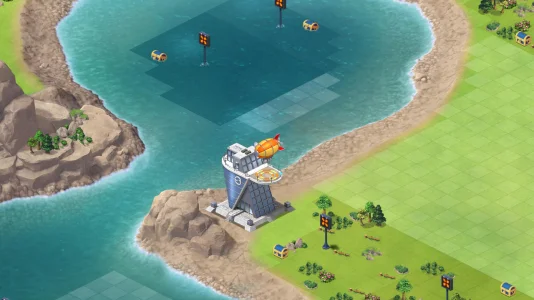
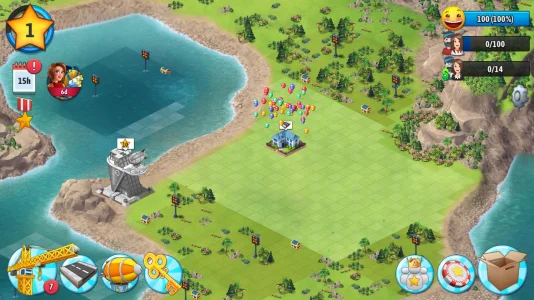
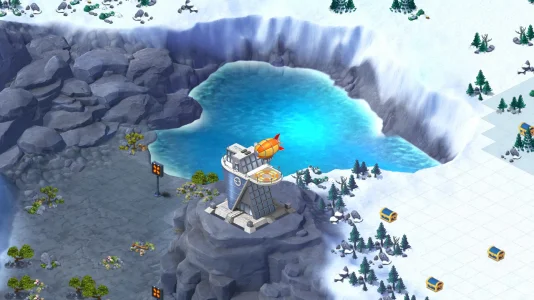
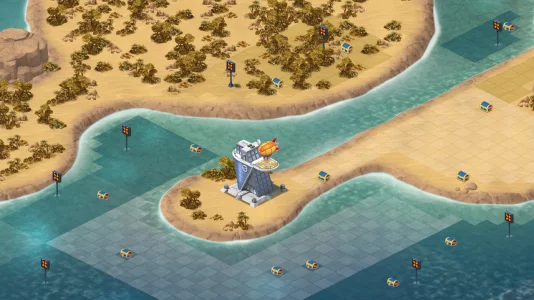
What is City Island 5 – Tycoon Building?
An In-Depth Analysis of City Island 5 - Tycoon Building
City Island 5 - Offline Tycoon Building Sim Game represents a significant installment within the casual city builder genre, meticulously developed by Sparkling Society Games B.V. This title, originally released on December 16, 2018, functions as a mature and highly refined product within the developer's extensive portfolio, which includes successful predecessors like City Island 4 and related simulations such as Village City. The game's full title explicitly communicates its core value proposition: it is a tycoon building simulation that offers full offline capability, a critical differentiator in the contemporary mobile gaming ecosystem. Positioned as a free-to-play (F2P) experience, the application is designed for both the Android and iOS platforms, offering a deep and rewarding progression system centered on a unique multi-island management mechanic. While Sparkling Society has begun promoting its successor, City Island 6: Building Life, City Island 5 continues to receive technical maintenance, ensuring a stable platform for its large user base. The game's design philosophy prioritizes a content-rich single-player experience, driven by a quest system that provides players with consistent objectives and valuable rewards. Its central innovation, moving beyond a single metropolis to a global portfolio of cities, establishes a complex logistical and strategic framework for players to master.Core Gameplay Mechanics and Systems
The Airship Expansion Model
The foundational gameplay loop of City Island 5 revolves around exploration and expansion, facilitated by a personal airship. Players begin their journey as the mayor of a small village on a single island and are tasked with its development into a thriving metropolis. The airship serves as the primary tool for expansion, allowing players to explore the world map and discover new islands. These territories feature diverse themes and surfaces—including sand, snow, and mud—which necessitate distinct construction strategies and building types. This cycle of building to generate resources, leveling up to unlock new capabilities, and dispatching the airship to colonize new land forms the game's central progression engine.Resource Management and Building Categories
Economic management in the simulation is predicated on a sophisticated system of resources and specialized structures. The game utilizes three primary building categories, each with a specific function within the urban ecosystem.- Residential Buildings: These structures are fundamental for housing the city's population. Their primary output is the generation of Cash, the game's soft currency, which funds most basic construction and upgrades.
- Commercial Buildings: Commercial enterprises serve as the main income generators. While many produce Cash, higher-tier commercial structures are crucial for generating the game's secondary currencies: Silver Keys, Gold Keys, and the premium hard currency, Gold.
- Community and Utility Buildings: This category includes essential services like parks, police departments, and fire stations. These buildings do not generate direct income but are required to maintain and increase citizen happiness, a critical metric that directly boosts the efficiency and output of residential buildings.
User Interface and Strategic Redevelopment
The game employs a standard and intuitive touch-based control scheme, allowing players to tap, drag, and pinch to interact with their cities. The graphical presentation is a notable strength, with detailed animations and the ability to zoom in to observe individual vehicles and pedestrians, which enhances the simulation's immersive quality. A key quality-of-life feature that adds significant strategic depth is the Building Storage system. This mechanic permits players to place constructed buildings into a virtual storage and subsequently redeploy them on any unlocked island. This functionality mitigates the permanence of early-game placement errors and enables advanced players to engage in strategic zoning, designating certain islands for maximum economic efficiency and others for purely aesthetic design.Game Modes and Player Experience
Primary Mode: Multi-Island Tycoon Simulation
The core of City Island 5 is its expansive single-player campaign. The player's objective is to grow a portfolio of cities by constructing hundreds of different buildings across a global map. This progression is not open-ended but is guided by a robust quest system. The game presents dozens of quests that offer clear short-term goals and reward players upon completion with Treasure Chests. These chests contain valuable resources, including the essential hard currency, Gold, which is vital for accelerating long-term growth and overcoming the game's monetization friction points.Secondary Mode: Asynchronous Social Interaction
While designed as an offline-first experience, City Island 5 incorporates non-essential social features that become active when an internet connection is present. This asynchronous multiplayer component allows players to visit the cities of their neighbors to observe different designs and strategies. The game also supports leaderboards and achievements, typically managed through platform-specific services like Game Center. The clear emphasis on the game being fully playable "offline or online" confirms that these social elements are supplementary and not required for core progression, making it an ideal choice for players with limited connectivity.Monetization and In-App Purchase Structure
City Island 5 employs a classic F2P monetization model designed to gate progression through time and price, thereby creating incentives for in-app purchases (IAP). The economy is built upon a hierarchy of currencies that creates a dual-gating mechanism. The Time Gate is characterized by construction timers and resource collection cycles, which can be bypassed using Gold. The Price Gate manifests in the late game through the exponentially increasing cost of land plots, which become prohibitively expensive without the use of Gold. This premium hard currency is the central driver of monetization, used to speed up processes, acquire exclusive buildings, and purchase high-cost land. The game's IAP portfolio includes direct purchases of Gold bundles, randomized rewards from Loot Boxes (Silver and Gold Chests), and convenience items like Cranes for construction acceleration.Technical Analysis for APK Deployment
System and Hardware Requirements
For users installing the application via an Android Application Package (APK), understanding the technical requirements is crucial for stable performance. Recent versions of the game, such as 5.2.1, mandate a minimum operating system of Android 7.0 (Nougat). The initial APK file size is relatively modest, ranging from approximately 124 MB to 153 MB, but the total installed footprint is significantly larger, requiring around 350 MB to 400 MB of storage to accommodate necessary OBB asset files. The most critical hardware consideration is system memory (RAM). Due to the complexity of simulating multiple developed islands simultaneously, a minimum of 2 GB of RAM is required, but a recommended 4 GB of RAM is necessary to ensure smooth, crash-free performance in the late game as the player's empire expands.APK and OBB Installation Procedure
A successful manual installation of City Island 5 requires proper handling of its Opaque Binary Blob (OBB) file, which contains the majority of the game's graphical and audio assets. The APK file itself contains the core program logic, and launching the game without the OBB file in place will result in a failure to start or a prompt for a large data download. The correct procedure involves first installing the APK but not launching it immediately. Next, the user must extract the OBB data folder (e.g., com.sparklingsociety.cityisland5) from its downloaded archive and manually move it into the device's internal storage at the specific path: `Android/obb/`. Once the OBB assets are correctly positioned, the game can be launched and will operate as intended.Developer Support and Community Engagement
Sparkling Society maintains an active relationship with its player base, consistently monitoring feedback from app store platforms and social media. Despite the shift in promotional focus to its newer titles, City Island 5 continues to receive technical updates focused on bug fixes and performance improvements, demonstrating a commitment to the stability of this legacy title. The developer's official Facebook page serves as the primary community hub for announcements. For the strategic F2P player, this channel is an essential resource, as the developer frequently distributes "weekly FREE giftcodes" that provide valuable in-game items, including the critical Gold currency. This engagement offers a tactical advantage, helping dedicated players mitigate the economic friction designed into the game's progression system.An Introduction to the Core Premise of City Island 5
City Island 5 – Tycoon Building is a casual city-building and tycoon simulation game. Players assume the role of a mayor, tasked with developing a small village into a thriving urban center. The game’s primary innovation introduces a global scope to the city-building genre. A player does not manage a single city but instead cultivates a portfolio of cities across numerous islands, each presenting unique themes and construction challenges. The core objective involves strategic expansion, resource management, and population growth across this global archipelago, a task achievable entirely offline.
Fundamental Gameplay Mechanics and Objectives
The Expansion Cycle: From a Single Village to a Global Metropolis
The central gameplay loop in City Island 5 propels player progression through a continuous cycle of construction and expansion. Players begin by constructing essential buildings on a starting island. These structures generate resources that fund further development and provide experience points. Accumulating experience causes the player to level up, which unlocks new building types and gameplay features. The most significant feature unlocked through progression is the personal airship. This airship allows the player to explore the world map and discover new islands. Colonizing these new territories, which feature varied surfaces like mud, sand, and snow, begins the development cycle anew, expanding the player’s city portfolio and economic base.
Building Categories and Their Strategic Functions
The simulation’s economy relies on a balanced ecosystem of three distinct building categories. Residential buildings serve the primary function of housing the city’s population, which is a prerequisite for unlocking other structures. Commercial buildings form the economic engine of a city; they generate the primary soft currency, Cash, as well as crucial secondary currencies like Silver Keys and Gold Keys. Finally, Community buildings, such as parks and emergency services, directly influence the population’s happiness. The strategic placement of these three building types creates a functional city where population growth, economic output, and citizen satisfaction are interdependent.
The Critical Importance of Citizen Happiness
Citizen happiness represents a vital gameplay metric that directly impacts economic efficiency. The game’s systems link high population satisfaction rates to a significant boost in the income generated by all residential structures. A player must strategically place community and utility buildings to maintain a high happiness level across each island. Neglecting citizen happiness results in reduced income, which slows progression and makes expansion more challenging. Therefore, managing happiness is not merely an aesthetic choice but a core economic Strategy for maximizing resource generation.
Player Progression and Resource Management
Navigating the Multi-Tiered Currency System
The game’s economy is structured around a hierarchy of three primary resource types. Cash serves as the soft currency, generated in abundance by most residential and commercial buildings. Players use Cash to fund routine activities like constructing basic buildings and roads. Keys, available in Silver and Gold variants, act as a secondary currency. Specific commercial structures generate these Keys, which players need to unlock specialized buildings and significant upgrades. The third and most critical resource is Gold, the game’s hard currency. Gold allows players to bypass time gates, purchase premium buildings, and acquire expensive land plots in the late game. Effective resource management requires players to balance the generation of all three currency types.
The Quest System as a Progression Guide
A robust quest system guides the player’s actions and provides a clear path for development. The game presents dozens of quests that create short-term objectives, such as constructing a specific number of buildings or reaching a population milestone. Completing these quests rewards the player with experience points and valuable Treasure Chests. These chests are a primary free source of essential resources, frequently containing large amounts of Cash, Keys, and the highly coveted hard currency, Gold. Following the quest line is therefore the most efficient way to accelerate long-term growth and expansion.
A Strategic Guide for Effective City Management
Initial Phases: Establishing a Self-Sustaining Economy
During the initial stages of gameplay, the player must focus on establishing a stable and profitable economic base. The first objective is to construct low-tier residential homes to build a population, followed immediately by commercial buildings that generate fast income. Early commercial structures often have very short collection timers, requiring active player engagement to gather resources frequently. This period of rapid, manual collection is crucial for building the capital needed for expansion. Players should also note that the game provides an initial income subsidy that decreases as the city’s organic revenue grows. The primary goal is to build a sufficiently profitable city that surpasses this subsidy level, marking the transition to a truly self-sustaining economy.
Advanced Strategies for Expansion and Optimization
As a player’s empire grows, success demands the application of advanced strategies for resource allocation and city planning. Efficient management transforms a collection of small towns into a powerful economic network.
- Prioritize Aggressive Exploration: A player’s most effective strategy is to use the airship to unlock new islands as quickly as possible. New islands provide fresh sets of quests and new opportunities to find Treasure Chests. This cycle of exploration injects critical hard currency and Keys into the player’s economy, accelerating progress far more effectively than grinding on a single, established island.
- Practice Strategic Gold Conservation: Gold is the paramount resource for overcoming the game’s most significant progression hurdles, particularly the escalating cost of late-game land plots. Players should conserve Gold earned from quests and achievements. Using Gold to speed up early construction offers a poor return on investment compared to saving it for essential, high-cost acquisitions that are otherwise inaccessible.
- Utilize the Building Storage System: The ability to place buildings into storage and transfer them between islands is a powerful logistical tool. Players can use this feature to specialize their islands. One island might become a densely packed commercial hub optimized for maximum income, while another could be designed for aesthetic appeal with numerous decorations and community buildings. This system allows for efficient redevelopment without the permanent loss of constructed assets.
- Diversify Your Economic Portfolio: As the game progresses, the player’s focus must shift from simple Cash accumulation to the generation of Keys and Gold. Constructing specialized commercial buildings that produce these higher-tier currencies is necessary for unlocking advanced content and maintaining the pace of expansion in the mid-to-late game.
Understanding Controls and the User Interface
Interacting With Your Growing Metropolis
City Island 5 employs a standard and intuitive set of touch-based controls for all interactions. Players tap on interface elements to select and construct buildings. The map view is controlled by dragging to pan across the city and using a pinch gesture to zoom in or out. The game’s user interface is supported by detailed graphics and animations. Players can zoom in closely to observe individual vehicles moving along roads and citizens walking through parks, which adds an immersive quality to the simulation experience.
The Strategic Value of the Building Storage System
The Building Storage feature is a significant quality-of-life mechanic that enhances strategic depth. This system allows any constructed building to be moved into a special inventory. From this storage, the building can be redeployed on any of the player’s unlocked islands at no additional cost. This functionality transforms city planning from a series of permanent decisions into a dynamic, cross-map logistical puzzle. Players can correct early placement mistakes, redesign entire city layouts for better efficiency, or transfer powerful structures to newly founded colonies.
Frequently Asked Questions
What is City Island 5?
City Island 5 is a casual city-building and tycoon simulation game where you manage a global portfolio of cities across multiple islands.
Can I play City Island 5 without an internet connection?
Yes, the game is designed to be fully playable offline, with core progression and building functions requiring no internet.
Who is the developer of the game?
The game was developed by Sparkling Society Games B.V., a company with a long history of creating mobile city simulation titles.
How do I unlock new islands to build on?
You can unlock new islands by using your personal airship to explore the world and discover new territories to colonize.
What is the best way to get free Gold?
The primary free sources for Gold are completing quests to earn Treasure Chests and using weekly gift codes from the developer's social media channels.
Can I move buildings after placing them?
Yes, a storage system allows you to place buildings into storage and then redeploy them on the same island or transfer them to another.
What are the main currencies in the game?
The game uses Cash for basic construction, Keys for special unlocks, and Gold as the premium currency for speeding up progress and buying premium items.
Is the game still being updated?
The game receives technical maintenance for bug fixes and performance, but new feature development has likely shifted to newer titles in the series.
What are the minimum Android requirements?
For recent versions, the minimum requirement is Android 7.0+ (Nougat), with at least 4 GB of RAM recommended for stable late-game performance.
How much storage space does the game need?
The total installed size of the game, including all necessary files, is estimated to be between 350 MB and 400 MB.
Are there social or multiplayer features?
Yes, when you are online, the game has asynchronous social features that let you visit the cities of your neighbors.
When was City Island 5 originally released?
The game was originally released on December 16, 2018.
Why does my profit seem low even after building more commercial structures?
Your visible profit may seem stagnant because the game provides an initial income subsidy that decreases as your city's own income rises.