

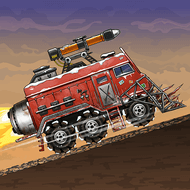
Download Earn to Die Rogue MOD New Update
Earn to Die Rogue reinvents the popular franchise as a chaotic Roguelite Platformer developed by Not Doppler. This spin-off challenges players to guide the survivor Greyson through zombie-infested buildings like warehouses, utilizing a Jetpack to dodge attacks in a 2D reverse bullet hell format. While the core gameplay emphasizes on-foot survival, the title retains a secondary Driving Game Mode where users upgrade Vehicles like trucks to farm resources. APK Games Tech highlights this strategic pivot offers deep meta-progression for mobile gamers.
Experience the action safely by downloading the game from GB Plus Apps for a fast, secure installation today.
Gameplay Gallery

About This Game
Overview of Earn to Die Rogue: Gameplay Evolution and APK Technical Analysis
The mobile gaming landscape frequently sees established franchises pivot toward trending genres to capture emerging audiences. Earn to Die Rogue represents a strategic evolution for the renowned Earn to Die series. Developed and published by Not Doppler, this title was officially released on May 9, 2024, marking a distinct shift from 2D physics-based driving simulations to the high-intensity Roguelite Platformer and 2D Reverse Bullet Hell Shooter genres. While the game retains the post-apocalyptic aesthetic of its predecessors, the core gameplay loop now prioritizes auto-attacking combat and platforming traversal over vehicle distance maximization.
This technical article provides a comprehensive analysis of Earn to Die Rogue for users considering a manual APK installation. It covers the dual-mode gameplay structure, progression mechanics, system requirements for Android devices, and the critical reception regarding its monetization ecosystem.
Core Gameplay Mechanics and Structural Design
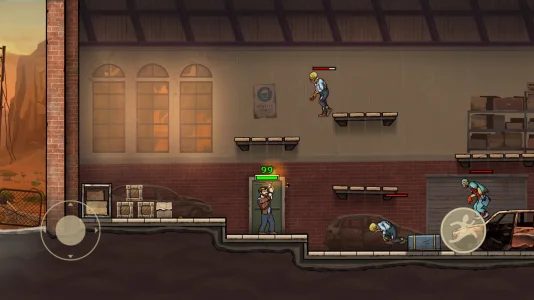
Earn to Die Rogue operates on a bifurcated gameplay structure that integrates standard roguelite mechanics with legacy driving elements. The primary experience, known as the Rogue Run, places the player in control of the main character, Greyson, within zombie-infested environments such as warehouses and military bunkers. The objective requires the character to clear 30 consecutive areas (rooms) to complete a Chapter. Combat is automated; the character attacks the nearest enemy without manual aiming, categorizing the title as a "lite bullet-hell." Consequently, player agency focuses entirely on positioning, movement, and avoidance using virtual touch controls.
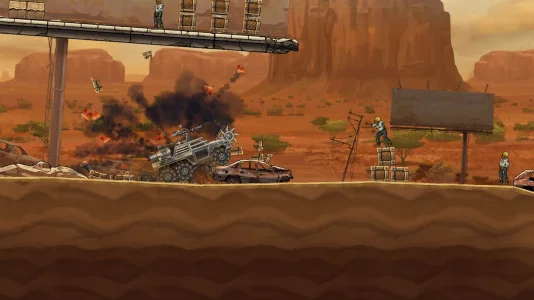
The secondary component is the Driving Game Mode. Unlike the original series, vehicles in Earn to Die Rogue serve a complementary function focused on resource farming. Players unlock and upgrade five distinct vehicles, including trucks, sports cars, and a hovercraft, by collecting parts during platforming runs. These vehicles allow players to smash through obstacles to harvest cash and items needed for permanent upgrades. However, this mode is functionally an appendix to the core platforming experience, designed to connect the spin-off to its franchise roots rather than acting as the primary campaign.
Progression Systems and Character Growth
The game utilizes a dual-layer progression system typical of modern roguelites. Temporary progression occurs within a single run, where players select from random upgrades upon leveling up. These boosts are lost upon death. Permanent progression, or meta-progression, is essential for overcoming the game’s steep difficulty curve. Key permanent growth vectors include:
- Stat Upgrades: Players spend accumulated cash to increase base hero attributes, specifically Health and Damage.
- Equipment Fusion: The inventory system includes over 25 pieces of equipment. Players must fuse items to raise their rarity tiers, a process where fusing three Epic items yields an interim tier rather than an immediate Legendary item.
- The Jetpack: This unlockable ability drastically alters gameplay by enhancing vertical mobility, which is critical for surviving dense enemy formations in later stages.
- Legacies: Upon achieving significant victories, such as completing a backstory segment, players earn permanent bonuses that apply to all future characters.
Technical Specifications and APK Installation
For users planning to sideload the application, understanding the technical constraints is vital for ensuring gameplay stability. The application package, identified as com.notdoppler.earntodierogue, is relatively lightweight compared to high-fidelity console ports.
System Requirements and Performance
Earn to Die Rogue is optimized for modern mobile hardware but maintains accessible minimum requirements. The game supports high refresh rate displays, capable of running at up to 118 FPS on powerful devices. However, users utilizing battery saver modes may experience frame rate caps at 59 FPS.
- Operating System: Minimum Android 7.1 (Nougat) or higher.
- Processor: Dual Core 1.7GHz equivalent (Minimum); Quad Core 2.3GHz (Recommended for bullet-hell segments).
- RAM: 2 GB Minimum; 4 GB Recommended to prevent overheating.
- Storage: Approximately 300 MB of available space is required for installation.
- APK Size: The file size varies between 121.5 MB and 156 MB depending on the specific build version, such as v1.18.211.
Connectivity and Data Management
While the Google Play Store listing categorizes the title as supporting offline play, a continuous internet connection is functionally mandatory for efficient progression. Offline play is restricted to the core Rogue Run. Vital features such as cloud saves, daily missions, and incentivized advertising—which are necessary for resource acquisition—require network access. Uninstalling the application without a server-side sync via Google Play Games may result in the loss of local save data.
Installation Guide and Troubleshooting
To install the Earn to Die Rogue apk manually, users must enable "Install from Unknown Sources" within their device's security settings. It is highly recommended to verify the downloaded file against the known developer SHA1 signature to ensure integrity and data safety. OBB files are generally not required due to the compact package size.
A significant technical issue reported by the community involves the advertising system. Players frequently encounter a bug where watching an incentivized ad for a power-up triggers a full application crash. This error forces a restart and results in the loss of the intended reward. Currently, the only workaround is to avoid specific ad interactions if stability issues persist.
Monetization and Difficulty Assessment
Earn to Die Rogue operates on a Free-to-Play model supported by In-App Purchases (IAPs) and advertising. The monetization structure is aggressive, featuring loot boxes, monthly subscriptions, and tiered Mission Passes. Community analysis identifies a severe "Grind Wall" emerging around Chapters 12 and 13. At this stage, enemy firepower and screen density scale exponentially, often exceeding the player's base survivability.
To navigate this difficulty spike, players must engage in extensive grinding or utilize the premium currency, Gold, to purchase high-tier chests. The drop rates for essential resources are intentionally low, pressuring users toward IAPs. While the game is technically playable without expenditure, the time investment required to obtain Legendary gear and bypass the difficulty wall is substantial.
Conclusion
Earn to Die Rogue successfully translates the chaotic energy of its predecessors into a polished Roguelite Platformer. With regular updates from Not Doppler introducing new content like the "Infernal Retreat" and "Putrid Borough," the game offers a robust experience for fans of the genre. However, users downloading the APK should be prepared for a high-friction economy and a significant reliance on equipment grinding to progress beyond the mid-game.
Game Overview and Genre Classification
Earn to Die Rogue represents a significant structural evolution within the established Earn to Die franchise. Developed and published by Not Doppler, this title shifts the series focus from physics-based driving simulations to the Roguelite Platformer and 2D Reverse Bullet Hell Shooter genres. Unlike its predecessors, which prioritized vehicle upgrades for distance maximization, this iteration adopts a side-scrolling combat format optimized for mobile devices. The game retains the post-apocalyptic aesthetic of the series while introducing a new gameplay loop centered on distinct stages, permanent character progression, and high-density enemy encounters.
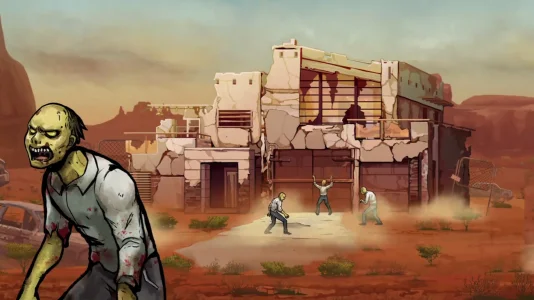
The core experience places the player in control of the protagonist, Greyson, who must navigate zombie-infested environments such as warehouses, abandoned malls, and military bunkers. The application operates on a bifurcated model where platforming combat serves as the primary mode, while the legacy driving mechanics function as a secondary resource-farming system. This design choice targets the expanding mobile roguelite audience by prioritizing polished action mechanics over the traditional driving simulation elements.
Core Gameplay Mechanics and Controls
The gameplay framework of Earn to Die Rogue relies on a loop of exploration, automatic combat, and death-mediated progression. The player engages in a "Rogue Run," attempting to clear 30 consecutive rooms (areas) within a specific location or Chapter. The control scheme utilizes virtual touch inputs designed for mobile interfaces, separating movement from combat operations.
Combat Automation defines the tactical approach of the game. Greyson automatically targets and fires upon the nearest enemy or turret. Consequently, the player exerts no direct control over aiming or shooting. This mechanic shifts the skill requirement entirely toward positioning, timing, and evasion. The player must utilize movement controls—including a joystick for direction and buttons for jumping—to dodge incoming projectiles and navigate environmental hazards. The inclusion of a double jump and an unlockable Jetpack further enhances vertical mobility, allowing the character to maneuver through dense formations of enemies and missile barrages typical of the bullet hell genre.
Temporary Power-ups influence the immediate success of a run. Upon leveling up during a stage, the system presents the player with a choice of three random upgrades. These boosts dramatically alter combat effectiveness but remain temporary, expiring upon the character's death. This stochastic element ensures that each run presents unique tactical challenges, forcing players to adapt their build strategy to the available options.
Game Modes and Objectives
Earn to Die Rogue features two distinct modes that feed into a single permanent progression path. Understanding the relationship between these modes is critical for efficient advancement.
The Rogue Run (Primary Mode)
This mode constitutes the main campaign experience. The objective involves surviving 30 distinct stages to reach and defeat a final boss. Success in this mode unlocks new Chapters and advances the narrative. The environment functions as a 2D side-scroller where the player collects loot, including cash, parts, and equipment. While the power-ups collected during the run are lost upon failure, the resources and equipment gathered are retained, contributing to the meta-progression system.
Driving Game Mode (Resource Farming)
The driving mechanics familiar to veteran fans appear in this secondary mode. Players unlock and upgrade vehicles, such as trucks, sports cars, and a hovercraft, by collecting specific parts during the primary roguelite runs. The Driving Mode allows players to pilot these vehicles through zombie hordes and over obstacles. However, the primary function of this mode is resource acquisition rather than progression. Players utilize vehicles to farm critical items and cash needed to upgrade the main character's stats. The physics engine facilitates "crazy ragdoll physics," providing visual feedback as vehicles impact enemies.
Progression Systems and Character Growth
Progression in Earn to Die Rogue divides into temporary run-based boosts and permanent meta-progression. The permanent upgrades are essential for overcoming the game's scaling difficulty.
- Stat Upgrades: Players spend accumulated cash to increase Greyson’s base attributes, specifically Health and Damage. These upgrades provide linear, guaranteed benefits that persist across all future runs.
- Equipment Fusion: The game includes over 25 pieces of equipment, ranging from weapons to armor. Players can fuse duplicate items to increase their rarity tier. The fusion system is complex; fusing three Epic (purple) items yields an interim "gold-bordered" Epic item rather than an immediate Legendary, requiring significant investment for top-tier gear.
- Vehicle Upgrades: Vehicles require collected components for unlocking and enhancement. Upgrades focus on specific parts like the Engine, Tires, and Armor, which directly influence the farming efficiency in Driving Mode.
- Legacies: Achieving major victories, such as completing specific backstory segments, unlocks Legacies. These provide permanent stat bonuses that apply to all future characters, acting as a long-term reward for clearing Chapters.
Strategic Gameplay Guide
New players must adopt specific strategies to navigate the early game and prepare for the exponential difficulty increases found in later chapters. The following steps outline the optimal approach for beginners.
Phase 1: Mobility and Initial Farming
The initial priority lies in mastering the movement physics. Since the character attacks automatically, the player must focus solely on avoidance. Early runs should prioritize gathering cash and car parts over attempting to clear the entire Chapter. Once resources are secured, the player should immediately invest in the Jetpack ability. This upgrade fundamentally transforms traversal, allowing the player to bypass ground hazards and effectively dodge the "screen spam" of projectiles encountered in advanced levels.
Phase 2: Resource Allocation
Efficient resource spending determines the pace of progression. Players should allocate approximately 70% of their vehicle upgrade currency to the Engine and 30% to the Tires. In the early stages, upgrading vehicle armor provides negligible durability benefits. A speed-focused vehicle build allows the player to outrun and bypass zombies in Driving Mode, maximizing the rate of resource acquisition. For the main character, consistent investment in base Health and Damage stats ensures that the baseline survivability increases regardless of the random power-ups obtained during a run.
Phase 3: Overcoming the Grind Wall
Players often encounter a significant difficulty spike, known as the "Grind Wall," around Chapters 12 and 13. At this stage, enemy firepower and density exceed the character's base survivability. To progress, the strategy must shift from skill-based evasion to gear-based tanking. Players should hoard Gold—the premium currency—and strictly avoid spending it on small items. Gold should be reserved exclusively for 10-item chest pulls, which offer the highest statistical probability of yielding Epic and Legendary equipment. Completing the Daily Missions System is mandatory during this phase, as it serves as the primary reliable source of Gold and cash needed to bridge the power gap.
Technical Performance and Requirements
For users accessing the game via APK installation, device performance directly impacts gameplay integrity, particularly during bullet-hell segments. Earn to Die Rogue requires a minimum operating system of Android 7.1 (Nougat) and approximately 300 MB of available storage space. The base APK file is relatively compact, typically ranging between 121.5 MB and 156 MB, and does not usually require separate OBB data files.
While the game functions on devices with 2 GB of RAM, a configuration of 4 GB of RAM and a Quad Core 2.3Ghz processor is recommended to maintain stability. The application supports high refresh rate displays, capable of running at up to 118 FPS on high-end hardware. However, performance consistency is vital; frame rate drops can occur in battery saver modes, hindering the player's ability to dodge fast-moving projectiles. A stable internet connection is effectively mandatory for progression, as cloud saves, daily missions, and loot synchronization depend on server connectivity.
Critical Assessment of Economy and Difficulty
The game employs a Free-to-Play model that heavily integrates incentivized advertising and In-App Purchases (IAPs). The difficulty curve scales aggressively, often described by players as a deliberate design to encourage the purchase of Mission Passes or loot boxes. The drop rates for high-tier resources are notably low, creating a bottleneck that demands extensive grinding or financial investment. Furthermore, users should be aware of a known technical issue where watching incentivized ads for power-ups can cause the application to crash, necessitating a restart and resulting in the loss of the intended bonus. Despite these friction points, the core loop of roguelite combat and permanent upgrades offers a compelling experience for enthusiasts of the genre.
Questions & Answers
What genre is Earn to Die Rogue?
It is primarily a roguelite platformer and 2D reverse bullet hell shooter, marking a shift away from the franchise's traditional driving focus.
Can I play Earn to Die Rogue offline?
Yes, the core "Rogue Run" mode works offline, but internet access is required for cloud saves, daily missions, and ad rewards.
What are the minimum Android requirements?
The game requires Android 7.1 (Nougat) or higher, a dual-core 1.7Ghz processor equivalent, and at least 2 GB of RAM.
How do combat controls work?
Combat is automatic with the character attacking the nearest enemy, leaving the player to control only movement, jumping, and dodging.
Is there a driving mode in the game?
Yes, but it is a secondary mode used mainly for farming resources to upgrade your character rather than the primary gameplay loop.
What is the "Grind Wall" players mention?
Around Chapters 12 and 13, enemy difficulty scales sharply, often halting progress until players acquire high-tier gear through extensive grinding.
Why does the game crash after watching ads?
A known technical bug frequently causes the application to restart after viewing an incentivized ad, which may deny the reward.
What is the best way to spend Gold?
Players should save Gold exclusively for 10-item chest pulls to maximize the probability of obtaining Epic and Legendary equipment.
How large is the APK file?
The APK file is compact, typically ranging between 121.5 MB and 156 MB depending on the version.
What should I upgrade first on my vehicles?
You should invest 70% of your currency into the Engine and 30% into Tires to maximize speed for efficient resource farming.
Does the game support multiplayer?
No, Earn to Die Rogue is a single-player experience with no multiplayer features.
How do I verify if my APK download is safe?
Advanced users can verify the file's integrity by checking the SHA1 signature against the known developer key provided in technical reports.
What is the latest version of the game?
As of listings updated in November 2025, the latest known version is 1.18.211.
Will I lose my progress if I uninstall the game?
Progress is generally saved server-side if logged into Google Play Games, but data from offline-only play may be lost during an uninstall.
What is the Jetpack used for?
The Jetpack is a critical mobility upgrade that helps players navigate difficult platforming sections and dodge dense enemy attacks.