Download Mobile Bus Simulator MOD Latest Version
Experience the authentic thrill of Indonesian transport with the latest Mobile Bus Simulator apk. Developed by LOCOS, this immersive title challenges you to transport passengers between terminals while mastering the culturally iconic Telolet horn mechanic. Customize your fleet with unique Liveries and Strobe Lights to dominate the highway traffic. Start your engine with a secure, high-speed Mobile Bus Simulator download exclusively at APK Games Tech today.
Screenshot Gallery
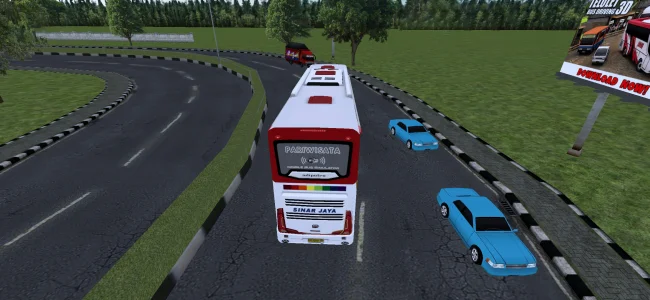
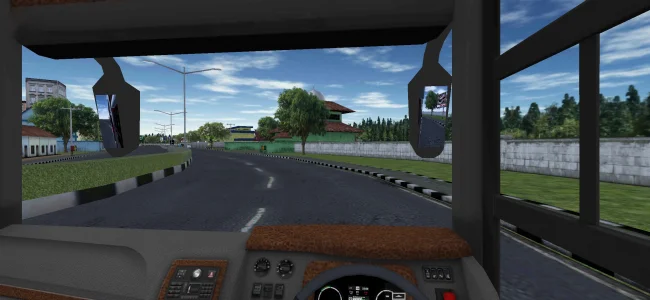
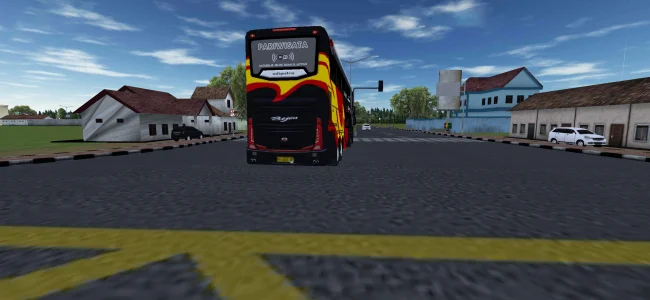
About This Game
Game Identity and Core Appeal
Mobile Bus Simulator stands as a seminal title within the Android vehicle simulation sector, carving out a distinct niche by diverging from Western-centric realism in favor of a culturally rich Indonesian experience. Developed and published by LOCOS (also known as LOCOS Creative), this title has secured a massive global user base, with installation estimates ranging between 50 million and 100 million. Unlike hardcore simulators that punish every minor infraction with game-ending failure states, Mobile Bus Simulator operates as a "Casual Simulator." It prioritizes the fantasy of being an independent bus operator, blending accessible driving physics with a light management tycoon experience.
From a technical perspective, the identity of the game is anchored in its package name, com.Locos.MBS. This identifier is crucial for users managing the Mobile Bus Simulator apk file structure, particularly when troubleshooting installation issues or managing assets. The game’s longevity—persisting well past its initial 2018 launch to current versions like 1.0.8b—is attributed to its ability to run on the "Fat Middle" of Android devices. By supporting older operating systems (initially Android 4.1, now 6.0+) and maintaining a compact initial footprint, LOCOS ensures accessibility for millions of players in emerging markets who might lack the hardware for Unreal Engine-based competitors.
Gameplay Mechanics and Loop
The core experience of Mobile Bus Simulator is defined by a rigorous "Earn-Upgrade-Expand" cycle. The gameplay loop avoids bloat, focusing entirely on the satisfaction of the driving experience and the "Independent Operator" progression fantasy. The primary content is structured around distinct modes that cater to different playstyles:
- Career Mode / Route Mode: This is the primary engine of the game. Players select a starting Terminal (such as Jakarta, Semarang, or Solo) and a destination. The system generates a waypointed route where the distance and difficulty dictate the potential payout.
- Open World / Free Roam: Often integrated into route selection, this allows for non-linear exploration. Players can choose to "travel farther" to discover landmarks without the pressure of a delivery timer, though fuel consumption remains a constraint.
- Garage Customization Hub: A 3D interface where the fruits of driving labor are visualized. Here, players apply upgrades and modifications to their fleet.
A unique mechanic that separates this title from generic simulators is the Telolet Interaction. As players navigate the highway, they encounter clusters of children holding "Om Telolet Om" signs. Honking the specific Telolet horn triggers a cheering animation and awards a currency bonus. This creates a positive reinforcement loop—Drive, Spot Children, Interact, Reward—that breaks the monotony of long highway stretches.
Is Mobile Bus Simulator free to play? Yes, the game adheres to a standard Freemium model. It is fully playable offline, allowing users to grind career modes and customize buses without an active data connection. However, it integrates ad-based revenue streams, such as rewarded videos that multiply trip income, which becomes mathematically mandatory for efficient progression in the later stages of the game.
Visuals, Audio, and Atmosphere
Built on the Unity 3D engine, the game’s visual identity is less about photorealism and more about "Visual Ownership." The graphics engine supports dynamic lighting and weather effects, which are critical for the Night Mode experience. The community places high value on aesthetic modifications that mimic real-world "Night Bus" culture. Players can install Strobe Lights (Strobo) and custom Velgs (rims), which dramatically alter the visual flair during night driving, even if they do not change the vehicle's physics.
The atmosphere is heavily influenced by localized Indonesian entities that add life to the AI traffic system. Unlike sterile city streets in other sims, players will encounter specific cultural vehicles:
- Tahu Bulat: A distinct "Round Tofu" food truck with a speaker, serving as a dynamic obstacle and cultural Easter egg.
- Stut Jack: Fast-moving chili delivery trucks known for erratic speed and weaving behavior, requiring players to drive defensively.
Audio plays a functional role in gameplay. Beyond the Telolet horn varieties, the ambient soundscape includes the boarding of passengers at the Terminal. The game validates the simulation aspect by animating passengers filing onto the bus, a crucial "immersion moment" that sets the potential revenue for the trip based on passenger count.
Progression and Meta Strategy
Progression in Mobile Bus Simulator is purely economic. There are no RPG-style driver stats; instead, the meta focuses on Revenue Maximization. The economic model is tuned to encourage players to move away from starter vehicles as quickly as possible.
The Upgrade Path
The optimal strategy revolves not around engine speed, but capacity. The defining metric for earnings is the passenger count. Therefore, the primary goal for any player is to save RP (Rupiah) to unlock a Super High Decker (SHD) or the apex Double Decker (DD) bus. A Double Decker carries significantly more passengers, exponentially increasing the "Revenue per Minute" of playtime.
Operational Efficiency
Success also requires managing "Short-Term Sinks." Fuel acts as a soft sink; players must locate a Gas Station entity on the minimap to refuel, reducing net profit. Furthermore, the game enforces traffic laws through Police entities. Running red lights or colliding with patrol cars results in immediate fines. The meta, therefore, favors routes that balance distance with safety, avoiding the "Out of Gas" failure state while maximizing the Telolet bonuses farmed from roadside children.
Economy and Monetization
The in-game economy utilizes a single soft currency, RP (Rupiah). Sources of income include Route Fares, Safety Bonuses, and Ad Multipliers. However, the economy is designed with a steep curve regarding high-tier vehicle acquisition. The Double Decker bus is expensive relative to early-game income, creating a "Pay-to-Accelerate" environment.
This grind is the primary driver behind the search demand for the Mobile Bus Simulator mod version. Players often seek modified APKs that offer "Unlimited Money" or "Unlocked All Buses" to bypass the dozens of hours required to afford top-tier chassis legally. These mods work because the game trusts client-side data for currency and inventory, lacking aggressive server-side validation for offline play.
However, using mods carries risks, specifically the "Black Screen" error caused by missing OBB files or signature mismatches. For the most stable and secure experience, players are recommended to stick to the official version. To ensure data integrity and proper asset loading, users should always perform a legitimate Mobile Bus Simulator download via the Play Store or verified third-party repositories that correctly bundle the APK with the necessary OBB assets (`main.x.com.Locos.MBS.obb`).
Mastering the Road: Core Mechanics & Controls
At its heart, Mobile Bus Simulator is a unique hybrid that blends casual driving physics with business tycoon management. Unlike hyper-realistic simulators that penalize every minor mistake, this game focuses on the "fantasy" of being an Indonesian bus operator. Before you attempt your first Mobile Bus Simulator download, it is crucial to understand that the controls are designed for accessibility on mobile devices, favoring a "low floor" for entry but requiring skill to master traffic flow.
The control scheme offers three distinct input methods to steer your vehicle: Tilt (using the device accelerometer), Steering Wheel (an on-screen virtual wheel), and Buttons (directional arrows). For precision driving, especially when navigating tight corners in a Super High Decker (SHD) bus, the Steering Wheel option is highly recommended.
Your primary interface consists of the following critical UI elements:
- Transmission: Located on the screen, you must toggle the Gear Lever between D (Drive), R (Reverse), and N (Neutral).
- Pedals: The Gas Pedal is on the right, and the Brake Pedal is on the left. Feathering the Brake is essential when approaching red lights to avoid fines.
- Utility Toggles: You will interact constantly with the Headlights, Wipers, and Hazard Lights buttons. During the game's dynamic "Night Mode," using Headlights is mandatory to avoid safety penalties.
- Passenger Interaction: The Door Button is context-sensitive. It must be manually tapped when stopped at a designated Terminal or bus stop to board passengers.
The core objective is straightforward but engaging: Transport passengers from a starting Terminal (e.g., Jakarta) to a destination city while managing fuel consumption, traffic laws, and passenger happiness.
Deep Dive: Game Modes & Objectives
Once you launch the Mobile Bus Simulator apk, you are presented with a streamlined set of modes that focus on the single-player experience. Understanding the distinction between these modes is key to maximizing your earnings.
Career / Route Mode
This is the primary way to play. You start at a specific Terminal and select a destination. The game generates a waypointed route across the map. Before departure, you must open the doors to let passengers board. The number of passengers determines your potential "Base Fare." The challenge here is efficiency; you must balance speed with safety. Crashing into AI traffic—such as the erratic Stut Jack chili trucks—will damage your bus and reduce your final payout. Successful completion of a route rewards you with RP (Rupiah).
Free Roam / Open World
For players who want to explore without the pressure of a specific passenger schedule, the game offers a Free Roam experience. Here, you can drive indefinitely, exploring the map's hidden landmarks or testing the top speed of a newly acquired Double Decker bus. While you don't earn fare revenue in the same structured way, this mode is excellent for practicing the "Ngeblong" (aggressive overtaking) technique without risking a high-value mission.
Garage & Customization
While not a "driving" mode, the Garage is where you will spend a significant amount of time. This is the tycoon aspect of the game. Here, you spend earned RP to upgrade your fleet. You can apply a custom Livery (skin), install Strobe Lights for night driving aesthetics, or upgrade your wheels to custom Velgs.
Progression System & Resource Management
The economy in Mobile Bus Simulator is intentionally simple, avoiding complex multi-currency systems found in other gacha games. The primary currency is Money or RP. Your goal is to accumulate enough RP to move from the starter bus to the high-capacity Double Decker (DD) tier. This progression is vital because larger buses carry more passengers, exponentially increasing your income per trip.
Below is a breakdown of the game's economy and how to manage it, especially for a Mobile Bus Simulator free player:
| Resource / Currency | How to Earn | Best Use / Strategy |
|---|---|---|
| RP (Rupiah) | Completing Routes, watching "Double Reward" ads, and Telolet Bonuses. | Save exclusively for the Double Decker bus first. Avoid spending on cosmetic Bumpers or Velgs until you have a high-income vehicle. |
| Safety Bonus | Driving without collisions and obeying traffic lights. | This is passive income. Drive conservatively in cities to maximize this. Aggressive driving is only safe on highways. |
| Telolet Bonus | Honking the horn for children holding signs. | A critical source of income for F2P players. Memorize where children spawn near Terminals. |
| Fuel (Gas) | Purchased at Gas Stations (Cost). | This is a "sink." Always fill up completely before a long trip to avoid running out in remote areas. |
Advanced Strategy & The "Telolet" Meta
The "Meta" (Most Effective Tactic Available) revolves around maximizing the unique cultural mechanic of the game: the Om Telolet Om phenomenon. Unlike Western simulators where silence is golden, here, noise is profitable.
The Dopamine Loop
As you drive, you will see groups of children standing on the roadside holding signs. The meta strategy involves keeping your thumb near the Horn Button. When you spot them, press the button to trigger the specific "Telolet" musical horn. The children will cheer, and you will receive an immediate cash bonus. Advanced players memorize these spawn locations to "farm" bonuses on every route.
Vehicle Synergy
The ultimate goal is to unlock the Double Decker bus. This vehicle has the highest passenger capacity in the game. Once unlocked, the "Revenue per Minute" increases drastically compared to the starter bus. A common mistake is upgrading the starter bus with expensive Strobe Lights or body kits. Avoid this. Hoard your RP until you can buy the SHD (Super High Decker) or DD chassis.
Modded Versions vs. Official Progression
You may encounter discussions regarding a Mobile Bus Simulator mod during your research. These modified versions often manipulate the local save files (which are stored client-side on your device) to grant unlimited money or unlock all buses instantly. While this bypasses the grind, it removes the satisfaction of the tycoon progression loop. Furthermore, the official game is balanced to be a "Pay-to-Accelerate" rather than "Pay-to-Win" experience, meaning diligent players can achieve the same results safely through standard gameplay.
Essential Tips for the Ultimate Bus Operator
- Master the Ad Multiplier: At the end of a long inter-city trip, a button will appear offering to double your income by watching a video. Always tap Watch Video on long routes. It is the single most mathematically efficient way to progress.
- Watch for Tahu Bulat: The AI traffic includes a unique "Round Tofu" food truck (Tahu Bulat). This vehicle, along with the Stut Jack chili trucks, behaves erratically. Give them wide clearance to avoid collision fines.
- Manage Your Fuel: Running out of fuel is a disaster. Keep an eye on the fuel gauge UI. If it drops below 25%, start looking for the Gas Station icon on the minimap immediately.
- Night Mode Lighting: If you are driving at night, ensure your Headlights are on. While Strobe Lights are cosmetic, standard lights are required to avoid accidents and penalties.
- Bumper Upgrades are Cosmetic: Remember that installing a heavy-duty Bumper does not increase your bus's durability or reduce damage from crashes. It is purely for the visual "Modified Bus" aesthetic.
- Installation Safety: If you need to reinstall the game or move to a new device, ensure you understand the file structure. The game requires both the APK and the OBB file to function. A common error is a "Black Screen" at launch, which usually means the OBB file is missing from the
Android/obb/com.Locos.MBSfolder.
Your Questions Answered
What is the primary goal of the Telolet horn mechanic?
Players use the rhythmic horn to entertain children on the roadside, triggering a cheering animation and awarding bonus currency.
Can Mobile Bus Simulator be played without an internet connection?
Yes, the career mode, free roam, and garage customization are fully functional offline, though ads and leaderboards require data.
What is the most expensive and desirable vehicle tier in the game?
The Double Decker (DD) bus is the highest tier and is considered the endgame goal for its high passenger capacity and earning potential.
How can players fix the black screen error at launch?
This error usually means the OBB file is missing or misplaced; users must ensure the OBB file is inside the Android/obb/com.Locos.MBS folder.
Does the game support real-time multiplayer convoys?
No, the game does not support real-time multiplayer (Mabar), limiting online features to leaderboards and cloud saves.
How do players apply custom skins to their buses?
Players can upload custom livery files (PNG or JPG) from their device storage via the customization menu in the Garage.
What is the significance of the Tahu Bulat truck in traffic?
It is a cultural Easter egg representing a "Round Tofu" food truck that acts as a dynamic obstacle in the AI traffic flow.
What are the minimum Android requirements for version 1.0.8b?
The latest version requires Android 6.0 (Marshmallow) or higher and at least 2GB of RAM to avoid crashing.
Why might the game fail to load a custom livery image?
This typically happens if the user has denied the application permission to access external storage or photos in the Android settings.
How can players earn the most money per trip?
Maximizing revenue requires upgrading to a Super High Decker or Double Decker bus and watching rewarded ads to double the income at the end of a route.
What is the package name used for file management and modding?
The specific package name for the game’s directory in the Android file system is com.Locos.MBS.
Are strobe lights purely cosmetic or functional?
While strobe lights are a visual upgrade for the "Night Bus" aesthetic, they do not change driving physics but enhance visibility during night cycles.
Is Mobile Bus Simulator available on PC platforms?
Yes, the title is accessible to desktop users via Google Play Games for PC.
How does the game monetize user activity?
The game uses a Freemium model with In-App Purchases for currency and aggressive ad placements, including rewarded videos to multiply earnings.
What happens if you uninstall the official version to install a mod?
Uninstalling the official game deletes the data folder, which results in the loss of all legitimate progress and save files.