
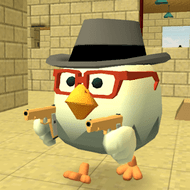
Download Chicken Gun MOD New Update
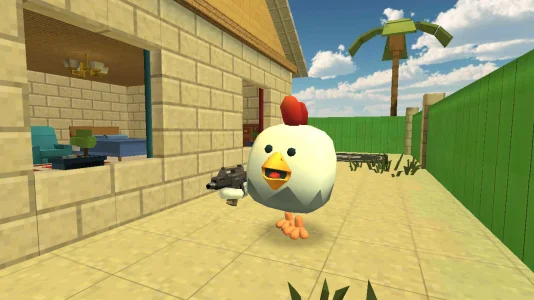
*Chicken Gun* is a 3D first-person action shooter developed and published by ChaloApps. The game’s core premise centers on chaotic online multiplayer combat featuring armed, anthropomorphic chickens. Players compete in team-based (5 VS 5) or free-for-all (Against All) deathmatches, utilizing a wide arsenal of weapons and various vehicles. Its gameplay is defined by a stylized, humorous aesthetic.
Game Images
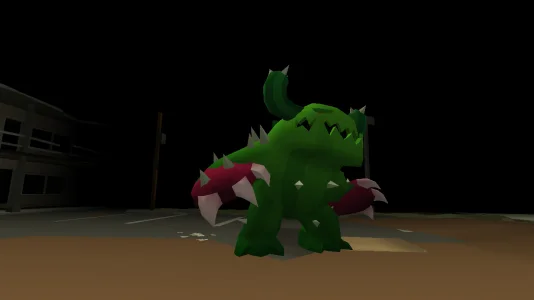
What is Chicken Gun?
An In-Depth Analysis of Chicken Gun: The Mobile Action Shooter
Chicken Gun represents a distinct entry in the mobile gaming ecosystem, blending chaotic combat with a highly stylized, humorous aesthetic. This article provides a comprehensive overview of the title, drawing exclusively from technical and gameplay analysis to inform users, particularly those engaging with the Android Application Package (APK). The game, developed by ChaloApps, has cultivated a significant global player base, evidenced by over 50 million downloads on the Android platform alone. We will explore the game's core architecture, from its genre classification and gameplay mechanics to its technical requirements and monetization strategy, offering a complete semantic profile of this popular online shooter.
Developer, Publisher, and Official Title
The mobile application is officially titled Chicken Gun, and its development and publication are managed by the studio ChaloApps. ChaloApps also holds the copyright for the intellectual property. While the public-facing name is consistent, internal file references sometimes use the package name "com.chaloapps.roosterrudy," suggesting a potential early development title of Rooster Rudy. On the iOS platform, Narek Martirosyan is listed as the designated seller, linking a key individual to the publishing entity.
Genre Classification and Core Premise
Chicken Gun is primarily categorized as an action Shooter. Its gameplay aligns with the sub-genres of 3D First-Person Shooter (FPS) and Tactical Shooter, although its chaotic nature leans more toward arcade action than methodical tactics. The game's central premise involves online multiplayer battles between armed, anthropomorphic chickens. Players control these rooster avatars in combat arenas, utilizing a diverse arsenal of weapons and vehicles to defeat opponents. This satirical and humorous approach to the shooter genre is a defining characteristic of its market appeal.
Supported Platforms and Update Cadence
ChaloApps has ensured broad accessibility for Chicken Gun by deploying it across the two dominant mobile operating systems. The game's success is also marked by a rapid and continuous development cycle, delivering frequent content updates to its large community.
Cross-Platform Availability on Mobile and PC
Chicken Gun is natively supported on both Android and iOS devices, solidifying its presence in the mainstream mobile market. For players seeking an alternative to the mobile experience, the game is also officially available on Windows PC through the Google Play Games Beta program. This PC version leverages Intel technology to facilitate optimized performance, bridging the gap between mobile and desktop gaming environments for this title.
High-Velocity Content Updates
The development philosophy for Chicken Gun emphasizes a high content velocity. ChaloApps frequently releases major version updates, with recent increments including versions 4.2.0, 4.8.0, and 4.9.0. These patches consistently introduce new content, such as discoverable "Easter Eggs" and "Secret Cars," which serves to maintain long-term player engagement. The latest verified APK version widely available in the ecosystem is 4.9.0, reflecting the developer's commitment to an active update schedule.
Core Gameplay Mechanics and Player Objectives
The gameplay of Chicken Gun is built upon a straightforward loop of combat, reward, and progression. Players engage in fast-paced matches with the primary goal of outperforming opponents to earn in-game currency, which is then reinvested into character and weapon enhancement.
The Fundamental Gameplay Loop
The moment-to-moment experience requires players to navigate combat arenas, manage a life bar, and use weapons and vehicles to eliminate opposing players. Success in matches translates directly into rewards of in-game currency. This currency is the engine of the game's long-term progression system, allowing players to pursue the overarching objective of acquiring a vast array of weapons and cosmetic customization options to personalize their rooster character.
Key Mechanical Systems
The tactical depth of Chicken Gun, though arcade-like, is derived from several interconnected systems that players must master for effective performance.
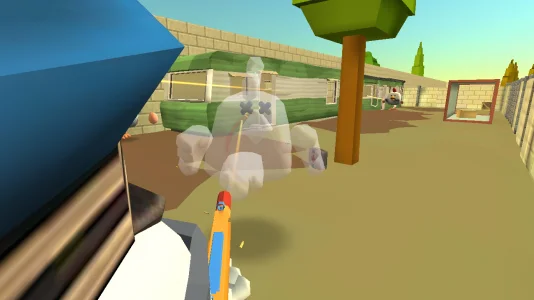
- Weaponry and Explosives: The game provides players with a diverse arsenal that includes satirical versions of military-grade firearms, such as machine guns and sniper rifles. Complementing this primary weaponry are secondary items like "explosive eggs," which function as grenades for area-denial and tactical flushing of opponents from cover.
- Customization and Progression: A central pillar of the game's long-term appeal is its extensive customization system. Players can modify their rooster's appearance with items like different beaks, sneakers, and caps. This visual progression is tied directly to the in-game economy and provides tangible goals for players to work toward.
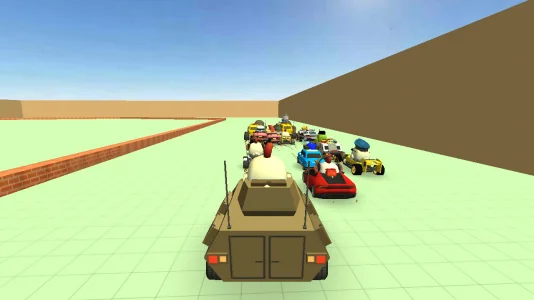
- Vehicle Utilization: Game maps are populated with various driveable vehicles, including motorcycles, cars, and even aircraft. These vehicles introduce a significant strategic layer, enabling rapid map traversal for flanking maneuvers, providing mobile cover, or facilitating quick escapes from unfavorable engagements.
Analysis of Online Multiplayer Game Modes
Chicken Gun is an exclusively online multiplayer game, focusing entirely on competitive player-versus-player combat. The experience is structured around two primary game modes, with additional emergent modes created and sustained by the community.
Primary Competitive Modes
The core of the game is divided into team-based and solo combat scenarios. The "5 VS 5" mode is a classic team deathmatch format where two squads of five players compete to achieve the highest number of kills before a match timer expires. This mode encourages strategic coordination and map control. Conversely, the "Against All" mode is a free-for-all deathmatch, where every player is hostile to every other. This mode eliminates team dynamics, focusing purely on individual combat skill and rewarding the player with the highest score at the end of the round.
Community-Driven and Emergent Gameplay
Beyond the official modes, the Chicken Gun community has cultivated its own ways to play. The presence of vehicles has led to informal racing modes, where players compete on tracks for currency or leaderboard status. Furthermore, player reports mention "forts servers," which are likely community-run lobbies that emphasize building mechanics or other sandbox-style creative scenarios, demonstrating the game's flexibility as a platform for player-defined fun.
Technical Profile and System Requirements for APK Users
For users planning a direct APK installation, understanding the game's technical demands is critical for ensuring stable performance. The requirements indicate a resource-intensive application, especially concerning storage and processing power.
Mobile Device Specifications and Storage
The minimum operating system required for the latest versions of Chicken Gun is Android 7.0 (Nougat). On the Apple ecosystem, iOS 15.0 or later is necessary. A crucial technical detail is the application's storage footprint. While the base APK file is relatively small (between 133 MB and 159 MB), the fully installed game on iOS occupies 2.3 GB of space. This disparity strongly indicates that the Android version requires a substantial Opaque Binary Blob (OBB) file or a significant post-installation download of assets, maps, and textures. Users must ensure several gigabytes of free space are available.
PC Requirements and Performance Implications
The official PC version via Google Play Games Beta has surprisingly demanding minimum specifications for a mobile title. It requires Windows 10 (v2004), 8 GB of RAM, a Solid State Drive (SSD) with 10 GB of free space, and an Intel UHD Graphics 630-equivalent GPU. These high requirements suggest the game's underlying engine is not fully optimized, which contextually validates widespread community complaints about "major lags" and poor network stability, even on powerful devices.
Monetization Strategy: IAPs and Aggressive Advertising
Chicken Gun operates on a free-to-play model, generating revenue through a combination of in-app purchases and in-game advertising. This dual strategy significantly impacts the user experience, particularly for non-paying players.
In-Game Economy and Purchases
The primary monetization vector is the sale of "Coins," the game's hard currency, through in-app purchases. These bundles range from $0.99 to $6.99. Coins are used to unlock superior weapons and a wide variety of cosmetic items. Because unlocked weapons provide a direct competitive advantage over the weak starter equipment, the economy fosters a "pay-to-progress" environment where free-to-play users face a significant grind to remain competitive.
The Impact of Disruptive Advertising
The game's advertising implementation is notably aggressive. Player feedback consistently reports the presence of frequent and disruptive interstitial ads. These full-screen advertisements can interrupt gameplay as often as every three minutes, leading to significant frustration and a degraded user experience. This strategy suggests a developer focus on maximizing ad revenue, potentially at the expense of player retention and satisfaction.
Final Overview: A Flawed but Entertaining Experience
Chicken Gun by ChaloApps successfully delivers a unique and humorous take on the mobile shooter genre, attracting a massive audience with its chaotic gameplay and constant stream of novelty content. Its core appeal is rooted in its absurd premise, deep customization, and the emergent fun made possible by its vehicle and physics systems. However, any user considering an APK installation must be aware of the game's significant technical shortcomings. The experience is persistently undermined by aggressive advertising, severe network lag, an ineffectual anti-cheat and moderation system, and a game balance that heavily favors paying players. Consequently, Chicken Gun is best suited for casual players who value chaotic entertainment over polished competition and are equipped with high-performance devices capable of mitigating its technical inefficiencies.
An Analytical Overview of Chicken Gun Gameplay
Chicken Gun is a 3D action shooter developed by ChaloApps. The game places players in control of armed, anthropomorphic rooster characters. These combatants participate in chaotic online multiplayer matches across various maps. The core premise establishes a humorous yet tactical experience, where players utilize a diverse arsenal of weapons and vehicles. The game’s primary loop involves competitive combat, which rewards players with currency for character progression and customization. Success in Chicken Gun demands an understanding of its distinct game modes, control schemes, and the strategic nuances created by its unique mechanics and technical environment.
Core Gameplay Mechanics and Player Objectives
The Fundamental Combat Loop
The moment-to-moment gameplay in Chicken Gun centers on combat engagement. Players navigate 3D environments with the objective of eliminating opponents. Each character possesses a life bar that dictates their longevity within a match. Players utilize weapons and vehicles to secure kills against enemy combatants. Performance in each match directly translates into earning in-game currency. This economic system forms the basis for the game’s long-term progression, driving players to refine their combat skills to achieve their customization goals. The main objective is to out-perform opponents by accumulating the highest number of kills within the match timer.
Player Progression and Customization
A primary long-term goal for players is the extensive customization of their rooster character. The in-game economy allows for the procurement of numerous cosmetic and functional items. Players can purchase and equip different weapons, beaks, sneakers, and caps to personalize their avatar. This progression system is directly funded by the currency earned through active gameplay. It is critical that players synchronize their game with a Google Play Games account. This action ensures that all purchased upgrades, weapons, and customization items are saved to the cloud, which prevents the loss of progress if the application is reinstalled or moved to a new device.
Controls and Movement Scheme
Chicken Gun employs a control scheme that is standard for the mobile first-person shooter genre. A virtual joystick on the left side of the screen handles character movement. A collection of action buttons on the right side of the screen facilitates aiming, firing, melee attacks, and launching grenades. New players may initially find the default controls present some difficulty for precise movement and aiming. However, user familiarity improves with extended play. Effective competitive performance often requires players to personalize their control layout and sensitivity settings, with some adopting multi-finger “claw grip” configurations for advanced maneuverability. The game also incorporates driveable vehicles, which introduce specific control inputs for operating cars, motorcycles, and airplanes.
Navigating Game Modes and Servers
Primary Competitive Modes
The game offers two main competitive multiplayer modes that define the core experience. The first mode is 5 VS 5, a team-based format. In this mode, two squads of five players compete against each other. Players must coordinate to achieve kills against the opposing team, and the team with the most kills at the expiration of the match timer wins. This mode is optimal for structured team practice and strategic map control. The second primary mode is Against All, which functions as a free-for-all deathmatch. This mode removes team affiliations, pitting every participant against all others. The player who achieves the highest score, typically by securing the most kills, is declared the victor. This mode serves as an excellent environment for practicing individual combat skills and accumulating currency quickly.
Community-Driven Experiences
Beyond the official modes, the Chicken Gun community has cultivated unique gameplay scenarios. Some servers host dedicated vehicle races, offering an alternative competitive path that focuses on driving skill rather than direct combat. Furthermore, players have established creative lobbies, often referred to as “forts servers.” These environments emphasize architectural mechanics or unique, player-created challenges, functioning similarly to sandbox modes where building and social interaction take precedence over standard combat objectives.
Strategic Insights for Competitive Play
Arsenal and Combat Tactics
A player’s arsenal includes a variety of military-style weapons, such as machine guns and sniper rifles, alongside unique throwable items like “explosive eggs.” These explosive eggs function as grenades, allowing for area-denial tactics and damaging multiple opponents. A significant strategic consideration is the performance disparity between different weapons. The starter weapons provided to new players are widely considered weak. This imbalance necessitates a strategic focus on earning currency to unlock or purchase superior weapons, as upgraded firearms provide a direct competitive advantage in combat engagements.
Vehicle Utilization
Maps within Chicken Gun are populated with a variety of vehicles that players can operate. These include motorcycles, cars, and even aircraft. Vehicles fundamentally alter the dynamics of a match by providing enhanced mobility. Players can utilize vehicles for rapid map rotation, allowing them to quickly move between objectives or defensive positions. They are also powerful tools for executing surprise flanking maneuvers on unsuspecting enemies. In defensive situations, vehicles offer a means of rapid retreat from disadvantageous firefights, making them a crucial element of tactical positioning and survival.
Countering Imbalances and Adversaries
The game environment presents several challenges, including weapon balance issues and the presence of hackers. New players will frequently face opponents equipped with “overpowered guns” that outperform starter equipment. A successful strategy to mitigate this disparity involves adopting aggressive evasion and hit-and-run tactics rather than engaging in direct firefights. Using explosive eggs and the environment for cover can level the playing field. Furthermore, players should learn to identify and avoid servers or specific map areas known for exploits, such as “wall glitches,” to maintain competitive integrity. Since the in-game vote-kick system is largely ineffectual, avoiding problematic lobbies is the most reliable countermeasure against cheaters.
Advanced Tips for Player Success
Achieving proficiency in Chicken Gun involves mastering its mechanics while navigating its technical limitations. The following strategies provide a foundation for improved performance and a more rewarding gameplay experience.
- Prioritize constant movement during combat. Remaining stationary for even a few seconds makes a character an easy target for enemy fire. Continuous motion reduces vulnerability and complicates enemy aiming.
- Invest early currency in weapon upgrades. The default weapons are not competitively viable against the upgraded arsenal available for purchase. Focus on acquiring a powerful primary weapon to immediately improve combat effectiveness.
- Use vehicles and map cover defensively. In chaotic matches, especially those affected by network lag, vehicles serve as excellent tools for escaping danger or quickly repositioning across open terrain.
- Explore maps to discover hidden content. The developer frequently adds “Easter Eggs,” “secret cars,” and other secrets to the game maps. Finding these can grant temporary tactical advantages or access to unique items.
- Understand that game performance is demanding. The game is known to suffer from “major lags” that can be related to device processing power, not just network latency. Players on less powerful devices may experience performance issues.
- Prepare for an extensive free-to-play grind. The economic model and weapon imbalance create a system where players without access to premium weapons must commit significant time to earn enough currency for competitive upgrades.
- Adapt combat style to counter weapon disparities. When outgunned, players should leverage flanking, surprise attacks, and environmental hazards instead of relying on direct gunfights.
Game FAQs
What kind of game is Chicken Gun?
It is a 3D First-Person Action Shooter where armed chickens participate in chaotic online combat.
Who is the developer of Chicken Gun?
The game is developed and published by ChaloApps.
What platforms can I play Chicken Gun on?
Chicken Gun is available on Android, iOS, and Windows PC through the Google Play Games Beta.
What are the main game modes?
The primary modes are 5 VS 5 team battles and Against All, a free-for-all deathmatch.
Does Chicken Gun require an internet connection to play?
Yes, a stable internet connection is mandatory as the core gameplay is exclusively online multiplayer.
Can I play Chicken Gun on a low-end device?
The game requires at least Android 7.0, but a powerful device is recommended to mitigate the game's major lag and high resource demands.
Can I customize my character?
Yes, players can customize their rooster character with various items like weapons, beaks, sneakers, and caps.
Are there vehicles in the game?
Yes, maps contain drivable vehicles including motorcycles, cars, and aircraft that players can use.
Will I lose my progress if I reinstall the game?
Progress linked to a Google Play Games account should be saved, but data can be lost if the account was not properly synchronized before uninstalling.
Does the game have a lot of ads?
Yes, the game features frequent and disruptive full-screen ads that can appear as often as every three minutes.
How often is the game updated?
The game receives frequent updates that typically introduce new content such as secret cars, Easter eggs, and cosmetic items.
Is Chicken Gun considered pay-to-win?
The game has a heavy pay-to-progress structure, as there is a significant power disparity between weak starter weapons and powerful purchased guns.
Are there known performance issues like lag?
Yes, the game is known to suffer from "major lags" due to both network instability and demanding performance requirements on the device.
What are "forts servers"?
They are community-driven servers or maps that focus on building mechanics or other unique player-created scenarios.