


Download Cooking Fever MOD For Free
*Cooking Fever* is a time-management Simulation game developed and published by Nordcurrent. The game places players in the role of a chef who must prepare a wide variety of dishes to serve customers efficiently within a time limit. Its core gameplay loop centers on progressing through numerous themed restaurants by strategically upgrading kitchen equipment and interior decorations. These upgrades are essential for managing the increasing speed and complexity required to satisfy customer orders and complete levels successfully.
Visual Preview



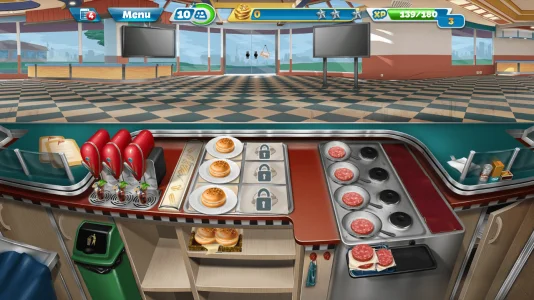
Cooking Fever Details
An In-Depth Analysis of Cooking Fever: Gameplay, Strategy, and Technical Specifications
Cooking Fever stands as an enduring and highly successful title within the mobile gaming landscape, exemplifying the cooking simulation and time-management genres. The game, developed and published by the Lithuanian studio Nordcurrent, has cultivated a massive global user base, accumulating over 450 million downloads since its initial launch. This analysis provides a comprehensive overview of its core mechanics, technical requirements, and strategic depth, drawing exclusively from detailed technical reports to inform players, particularly those utilizing the Android Package Kit (APK) distribution method.
The title's history traces back to its iOS release on September 27, 2014, followed by its Android debut on March 2, 2015. Nordcurrent later expanded its platform availability to include Windows Phone and PC, demonstrating the game's proven core loop and widespread appeal. Classified as a Simulation game with a focus on virtual career progression, Cooking Fever continues to receive content updates, with recent versions like 25.0.0 introducing new restaurant themes such as the Bavarian Festival.
Core Gameplay Mechanics and Objectives
Cooking Fever operates as a high-speed time-management simulator that demands rapid cognitive processing and precise touch-based controls. The central objective for the player is to serve an escalating number of demanding customers by efficiently preparing and delivering a wide variety of dishes within stringent time limits. The gameplay loop involves utilizing a diverse array of kitchen appliances—from grills and coffee makers to specialized pizza ovens—to assemble complex orders. Success in each level is quantified by reaching specific coin targets, with a three-star rating representing maximum proficiency.
Progression and Resource Management
Player progression is intrinsically linked to two primary mechanics: upgrades and strategic resource allocation. In-game currencies, Coins and Gems (also known as Diamonds), are invested into permanent improvements. Kitchen equipment upgrades enhance cooking speed and capacity, while interior decorations increase customer patience and the value of tips. As the premium currency, Gems are a scarce resource, compelling players to make strategic decisions about which upgrades to prioritize. This economic system forms the foundation of the game's challenge, requiring careful planning to overcome the difficulty curve of its more than 400 levels spread across over 20 unique restaurant locations.
Game Modes: Structuring the Player Experience
The gameplay in Cooking Fever is organized into three distinct modes, each designed to structure progression, deliver rewards, and foster competitive engagement. All modes are fundamentally built around the core objective of achieving three-star ratings in level completions.
Career Mode
Career Mode represents the main body of the game. In this mode, players progress sequentially through the 40+ levels associated with each restaurant they unlock. The ultimate reward for achieving a perfect three-star rating on every level within a single restaurant is the valuable Chef Mystery Box. This location-based progression serves as the primary pathway for unlocking new content and advancing through the game's extensive catalog of culinary challenges.
Challenges
Challenges introduce high-stakes, time-limited level sequences that add variance to the standard gameplay. These events typically require players to complete a series of 15 special levels and are often accessible even in restaurants that have not been fully completed in Career Mode. Entry requires an investment of premium currency, such as 14 gems, but success yields a significant prize, like 30 gems. This high-risk, high-reward structure serves a crucial function in the F2P economy by encouraging disciplined resource management. A consolation prize of coins and a few gems is typically awarded for a failed first attempt.
Tournaments
Tournaments function as the game's asynchronous competitive mode, held twice a week. Participation is reserved for experienced players who have reached XP Level 4 and have fully upgraded all equipment and ingredients in the tournament's host location. Entry is costly, generally requiring around 20 gems. The competition centers on achieving the highest number of consecutive three-star level completions over a three-day period. The rewards are substantial, with first place earning 300 gems, making Tournaments the most lucrative source of free premium currency for highly skilled players.
Technical Profile and System Requirements for Android APK
For users installing Cooking Fever via an APK file, understanding the game's technical demands is critical for a stable experience. The game presents unique challenges related to its operating system compatibility and, most notably, its substantial storage consumption.
Operating System and Hardware Compatibility
Nordcurrent has updated the game's compatibility over time. To run the latest versions, a device must support Android 9.0 or a more recent iteration, as support for older Android releases has been discontinued. While specific CPU requirements are not officially detailed, optimal performance is achieved on devices with 4 GB of RAM or higher. A minimum of 3-4 GB of RAM is recommended to manage the high concurrency of complex, late-game levels without performance degradation.
The Mandatory Internet Connection
Potential players must understand that Cooking Fever requires a constant internet connection to function. This is not an optional feature but a core architectural requirement. The connection facilitates several key functions: it synchronizes player data to cloud servers to prevent progress loss, enables access to F2P features like daily rewards and competitive events, and delivers new restaurant content as needed. Consequently, the game is unsuitable for any offline play scenarios.
Managing the Substantial Storage Footprint
A significant technical consideration is the game's misleading storage footprint. The initial APK installation size is a moderate 212 MB to 225 MB. However, as a player unlocks new restaurants, the game downloads and retains the associated content packs, causing the total application data to expand dramatically, often reaching a massive 13 to 14 GB. This internal storage bloat necessitates active data management, often requiring users to perform a clean reinstallation and selectively re-download content only for currently active restaurants.
Strategic Guide: Mastering Cooking Fever
Achieving mastery in Cooking Fever hinges on disciplined resource management and a deep understanding of its underlying economic systems. Players who adopt sophisticated strategies can navigate the game's challenges more effectively, especially in a Free-to-Play context.
- Practice Gem Conservation: The most critical strategy is to conserve Gems. Players should only purchase the essential upgrades required to achieve three stars on the final level of a restaurant. Avoid spending Gems on minor or purely aesthetic upgrades, saving them for unlocking new restaurants or purchasing game-changing automated appliances.
- Follow a Prioritized Upgrade Matrix: When spending resources, focus first on kitchen upgrades that increase cooking speed or capacity. Subsequently, invest in interior upgrades that extend customer wait time, as this provides a greater strategic advantage than upgrades that only increase tip amounts.
- Utilize Tempo Control: To manage overwhelming customer waves, players can manipulate the spawning rate. By serving a group of customers but only collecting a portion of the coins they leave, the player can delay the arrival of the next wave, effectively slowing the level's pace and reducing multitasking demands.
- Leverage Consumable Boosters: For exceptionally difficult levels, using consumable boosters can be more cost-effective than investing in permanent Gem upgrades. The Wait Time booster (hourglass icon) and the Price booster (drink and hamburger icon) are particularly effective for securing three-star ratings on challenging stages.
Monetization Model and Free-to-Play Economy
Cooking Fever employs an aggressive, multi-layered F2P economic model built on manufactured resource scarcity. The system is designed around two currencies: easily farmable Coins and the premium hard currency, Gems, which function as the primary progression bottleneck. The acquisition of Gems without real-money expenditure is intentionally difficult, pushing players toward in-app purchases or subscriptions to maintain progression momentum in later stages.
To monetize its large non-paying user base, Nordcurrent integrates advertising extensively. Rewarded video ads, primarily accessed through the in-game casino, are positioned as the most reliable method for F2P players to acquire resources. The developer also utilizes intrinsic ads, which can appear during active gameplay and are frequently cited by users as a source of distraction. For paying users, a subscription model is offered, providing a significant monthly influx of Gems and other benefits that directly neutralize the core frustrations of the F2P experience.
Conclusion: An Assessment of Cooking Fever
Cooking Fever remains a defining title in the time-management simulation genre, offering addictive and challenging gameplay paired with an immense volume of content. Its appeal is rooted in a satisfying loop of skill-based execution and strategic progression. However, this experience is tightly controlled by a monetization system that heavily incentivizes spending through severe premium currency scarcity.
For players approaching the game via APK download, the primary technical hurdle is the management of its massive 14 GB storage footprint, which requires proactive measures like periodic reinstallation and selective content downloads. The game is highly recommended for competitive players who enjoy complex, speed-driven challenges and are prepared to navigate its F2P economy with either strategic discipline or financial investment. Its longevity and continued updates from developer Nordcurrent ensure a deep and polished experience for those willing to engage with its demanding systems.
Understanding the Core Gameplay Loop
Cooking Fever operates as a high-speed time-management simulation game. The player assumes the role of a chef who must manage various restaurant kitchens. The core gameplay loop requires rapid cognitive processing and precise touch-screen interaction to fulfill customer orders against a time limit. Players must prepare hundreds of unique dishes using a diverse array of kitchen appliances. This equipment ranges from basic grills and coffee makers to specialized tools like pizza ovens and rice cookers. A stable internet connection remains a mandatory requirement, as the system needs constant server communication for progress synchronization and access to key game features.
Objectives and Player Progression
The primary objective within each level involves serving customers efficiently to achieve a specific coin target. Success is quantified through a three-star rating system, with three stars representing maximum performance. Player progression unfolds across more than twenty distinct restaurant locations, each containing over forty levels to complete. These locations offer specialized culinary themes, including a Fast Food Court, a Sushi Bar, and a Chinese Restaurant. Failure to provide swift service causes customers to leave, which directly prevents the player from meeting the required revenue goals for the level.
Controls and Core Mechanics
The game utilizes an exclusively touch-based control scheme. Players execute a rapid sequence of taps on the screen to manage all kitchen operations. These actions include initiating cooking processes, assembling complex orders, serving dishes, and collecting payments. High-level performance demands significant hand-eye coordination and multitasking capabilities. The progression system is built upon two fundamental mechanics: upgrades and resource allocation. Players invest game currencies into permanent improvements for both kitchen equipment and restaurant interiors. Kitchen upgrades enhance cooking speed and appliance capacity, while interior decoration upgrades increase customer patience and the value of tips received.
Navigating Game Modes for Optimal Rewards
Cooking Fever structures its gameplay across three primary modes. Each mode centers on the core objective of level completion but offers different rewards and competitive experiences. These modes guide player progression, deliver valuable resources, and drive engagement through competition.
Career Mode: The Foundational Journey
Career Mode constitutes the main gameplay experience. In this mode, players systematically progress through the sequential levels of each unlocked restaurant location. The ultimate goal within a location is to achieve a three-star rating on all of its associated levels. Accomplishing this feat rewards the player with a Chef Mystery Box, a high-value prize container. This location-based progression serves as the foundation for participation in the game’s other competitive modes.
Challenges: High-Risk, High-Reward Events
Challenges introduce special, time-limited level sequences that add variance to the standard progression. These events require the player to complete fifteen special levels, often with unique conditions. A player can access these challenges even in restaurants they have not fully completed. Participation requires an initial investment of premium currency, typically around fourteen gems. Successful completion yields a substantial prize, such as thirty gems, establishing a high-risk, high-reward economic loop. The system provides a consolation prize of coins and gems if a player fails the first attempt.
Tournaments: The Pinnacle of Competition
Tournaments function as the game’s primary asynchronous competitive mode. These events occur twice per week and restrict entry to experienced players who have reached a minimum experience level. Participants must also have fully unlocked all cooking equipment and ingredients in the tournament’s host restaurant. Entry into a tournament requires a significant premium currency fee. The competition challenges players to complete the highest number of consecutive levels with a three-star rating over a three-day period. The rewards represent the most lucrative source of free gems, with top-ranking players winning hundreds of gems for their performance.
A Strategic Guide to Kitchen Management
Rapid initial success in Cooking Fever depends on methodical operational steps and strategic decision-making. Effective management of the game’s flow and resources is essential for overcoming the increasing difficulty of later levels.
Initial Restaurant Progression
New players should unlock restaurants in the order dictated by experience point progression to ensure a balanced difficulty curve. The recommended starting path begins with the Fast Food Court, proceeds to the Bakery, and then moves to the Sports Bar. Players should avoid unlocking locations randomly, as some restaurants possess steep difficulty curves that can halt progress without significant prior investment in upgrades. During these early stages, players should focus on purchasing only the foundational equipment upgrades required to meet level targets, thereby conserving precious resources for more complex future kitchens.
Advanced Gameplay: The Coin Manipulation Technique
Experienced players can employ a specific tactic to control the pace of difficult levels. This coin manipulation technique directly influences the customer spawning rate, reducing the multitasking demand.
- The player serves the first wave of customers, who will leave coin piles on the counter.
- The player must avoid collecting all the coin piles immediately, as this action triggers the arrival of the next customer wave.
- The player instead collects only a portion of the available coins, for example, two of four piles.
This deliberate delay limits the number of actively waiting customers. This action effectively slows the level’s pace, allowing the player to focus on preparing high-value dishes and maximizing tips from the remaining patrons.
Mastering Resource Allocation and Upgrades
Mastery of Cooking Fever requires disciplined resource management. Understanding the game’s economic systems allows a player to progress efficiently by making calculated investments in upgrades.
The Principle of Gem Conservation
The most crucial long-term strategy involves the conservation of Gems, the game’s premium currency. The goal is not to purchase every available upgrade in a restaurant. Instead, the player should only purchase the specific upgrades necessary to successfully complete the final level with three stars. Gems should be saved primarily for unlocking new restaurant locations and acquiring game-changing appliances like automated cookers. Strategic players avoid spending Gems on minor aesthetic enhancements, ensuring resources remain available for more expensive and difficult future locations.
Strategic Upgrade Prioritization
When allocating limited Coins and Gems, a weighted upgrade strategy ensures the maximum return on investment. Players should follow a clear priority matrix for maximum efficiency.
- Kitchen Speed and Automation: Upgrades that increase cooking speed, expand plate capacity, or automate repetitive tasks should be the highest priority. These improvements directly affect service time and the ability to handle concurrent orders.
- Customer Wait Time: Interior upgrades that increase customer patience are exceptionally valuable. Extending the time a customer will wait before leaving is more impactful than upgrades that only increase tip amounts, which often provide diminishing returns.
Leveraging Consumable Boosters for Success
When facing extremely difficult end-game levels, players can use consumable boosters as a substitute for expensive permanent upgrades. This approach allows a player to achieve a three-star rating without a significant long-term gem commitment. The most effective boosters increase customer patience (hourglass icon) or boost the price of served items (drink and hamburger icon). Players can acquire some of these boosters, particularly desserts, for free by engaging with the game’s daily reward systems, which often involve watching rewarded advertisements.
Popular Questions
Who developed Cooking Fever?
Cooking Fever was developed and published by the Lithuanian studio Nordcurrent.
Can I play Cooking Fever offline?
No, the game requires a constant internet connection to synchronize progress, access daily rewards, and participate in events.
What is the main objective of the game?
The main objective is to efficiently serve customers by preparing and combining ingredients to achieve specific coin targets for each level.
What are the minimum Android requirements for the latest version?
To run the latest version of the game, your device must support Android 9.0 or later.
Why does Cooking Fever use so much storage space?
The game's storage can grow up to 14 GB because it downloads and retains the specific content packs for every restaurant you unlock.
How do I save my game progress?
Progress is saved automatically to the server when connected to the internet and can be restored by linking the game to a cloud service like Facebook.
Is it possible to succeed in the game without spending money?
Yes, but it requires disciplined resource management, successful participation in tournaments, and watching a significant number of rewarded ads.
What are the main game modes?
The three primary game modes are Career Mode for level progression, time-limited Challenges for high rewards, and competitive Tournaments.
How often are new restaurants released?
New restaurants are released frequently, typically coinciding with major version updates that also include bug fixes and improvements.
What is the best way to spend the premium currency (Gems)?
Gems should be conserved and spent primarily on unlocking new restaurants, purchasing mandatory appliances, and buying interior upgrades that extend customer wait times.
Does the game have a real-time multiplayer mode?
No, the game does not have real-time co-op, but it features asynchronous competition through twice-weekly Tournaments.
What happens if I fail a Challenge?
If you fail a Challenge on the first attempt, you receive a small consolation prize, typically consisting of 10,000 coins and 5 gems.
How can I reduce the game's large storage size?
You can reduce storage usage by linking your account to the cloud, reinstalling the app, and then only downloading the content for restaurants you intend to play.