


Download Driving School MOD Latest APK
**Driving School 2017** delivers a comprehensive **Simulation** experience developed by **Ovidiu Pop**, challenging players to master distinct road regulations across **15+ detailed maps**. The core gameplay structures progression through **Career Mode**, where users earn **Car, Bus, and Truck Licenses** by completing **80+ levels** utilizing authentic controls like the **Manual Transmission with clutch** and **Tilt Steering**. Featuring **nearly 100 vehicles** and a sandbox **Free Ride Mode**, this fully **Offline** title offers deep mechanical engagement, as analyzed by **APK Games Tech**.
Secure the complete **APK + OBB** package safely and quickly by downloading **Driving School 2017** today from **GB Plus Apps**.
Screenshot Gallery
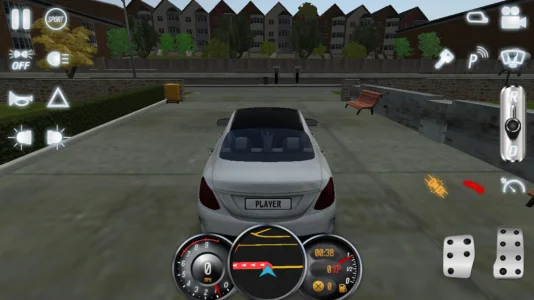
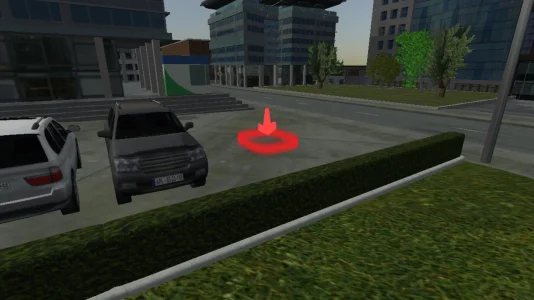
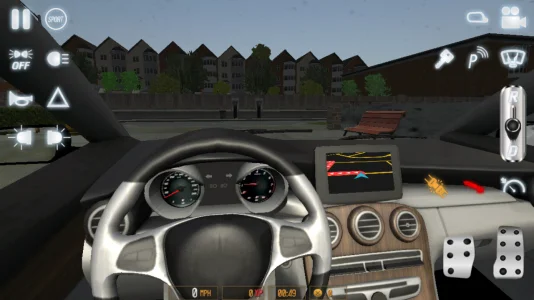
Description
Overview of Driving School 2017
Driving School 2017 stands as a significant title in the mobile simulation genre, developed by Ovidiu Pop (operating under the studio name Ovilex Software). Originally released on July 20, 2017, for Android and iOS, the application distinguishes itself from arcade racers by prioritizing adherence to traffic regulations over speed. While the game is currently considered End-of-Life (EoL) and is no longer actively maintained by the developer, it retains a dedicated user base. This enduring popularity is largely due to its comprehensive offline functionality and the inclusion of enthusiast-focused features, such as a fully simulated manual transmission with clutch.
Game Architecture and Development Status
The operational status of Driving School 2017 is complex. The latest known build, version 7.0.0, represents the final iteration of the software. Although some digital storefronts display update dates as recent as October 2025, these are technical artifacts rather than evidence of active development. Ovilex Software has superseded this title with newer releases, such as Driving School Simulator, effectively rendering the 2017 version as legacy software. For users downloading the APK, this implies that the game serves as a static "snapshot" of 2017-era mobile simulation, free from live-service updates but also lacking developer support for bugs or compatibility issues.
Core Gameplay Modes and Progression
The application structures its content into distinct modes that cater to both disciplined progression and open exploration. The content is substantial, featuring nearly 100 unlockable vehicles and over 15 detailed maps.
Career Mode
The primary single-player campaign, Career Mode, serves as the structural backbone of the game. It encompasses over 80 levels designed to test the player's precision and knowledge of traffic laws. Progression is gated behind specific licenses: Car, Bus, and Truck. Unlike racing games, the objective here is to navigate from a starting point to a designated parking zone without incurring penalties. The scoring system deducts points for infractions such as failing to use turn signals (blinkers), running red lights, or exceeding the speed limit.
Free Ride and Multiplayer
Complementing the structured career is Free Ride Mode, a sandbox environment where players can operate any unlocked vehicle across available maps without objectives or penalties. This mode allows for the exploration of the game's open-world environments, including cities, deserts, and mountain passes. The title also supports Multiplayer functionality, offering modes such as Racing and Catch the Flag, though these require a persistent internet connection, unlike the single-player components.
Simulation Mechanics and Controls
Driving School 2017 implements a variety of control schemes to simulate the mechanical process of driving. The game supports tilt steering, touch buttons, and a virtual steering wheel. However, its defining feature is the transmission system.
- Manual Transmission with Clutch: This control option adds a third pedal to the interface. Players must manually engage the clutch to shift gears, a mechanic that appeals strongly to simulation enthusiasts.
- Fuel System: Vehicles consume gas during operation, requiring players to visit gas stations to refuel using in-game currency.
- Detailed Interiors: Every vehicle features a unique, fully modeled cockpit view, enhancing immersion.
- Realistic Traffic Rules: The game enforces real-world protocols, including mandatory seatbelt usage, stopping at stop signs, and signaling before lane changes.
Technical Requirements and APK Installation
Installing Driving School 2017 via APK requires attention to file management and operating system compatibility. The installation process is not a single-file operation due to the game's reliance on an OBB (Opaque Binary Blob) file for asset storage.
File Structure Breakdown
Users will encounter differing file sizes across repositories. The 83 MB file is solely the APK installer and is insufficient to run the game. The complete package is approximately 725 MB, which includes the essential OBB data containing graphics and map assets. Failure to install the OBB file correctly results in a black screen or a "download failed" error upon launch.
OS Compatibility and Versioning
A critical "compatibility trap" exists regarding the Android OS version. The version 7.0.0 APK was recompiled late in the game's lifecycle to target newer Android SDKs, specifically Android 11+. Users with older devices (Android 9 or lower) may find this package incompatible and must seek a legacy version, such as v5.9.
Installation Procedure
- Download the full APK Bundle (often labeled as XAPK) or separate APK and OBB files.
- If installing manually, place the OBB folder named
com.ovilex.drivingschool2017into the device's internal storage directory:Android/obb/. - Install the APK file. Launching the game will now successfully trigger the data load.
Monetization and Economy
The economic model of Driving School 2017 reflects the aggressive monetization strategies of its era. While the game is free-to-play, the progression system includes significant friction points designed to encourage In-App Purchases (IAP). Later levels in Career Mode present high difficulty spikes, often described by users as "nearly impossible" without acquiring high-performance vehicles.
Currency farming is a necessity for non-paying players. The economy relies heavily on an "Ad-Doubler" mechanic, where players can watch video advertisements to double their mission rewards. It is important to note that while the game is playable offline, the ad-doubler feature requires an internet connection, potentially slowing down progression for purely offline users.
Conclusion
Despite its status as discontinued software, Driving School 2017 remains a valuable download for a specific subset of mobile gamers. Its bugs and dated graphics are offset by the depth of its content—featuring nearly 100 cars and robust manual controls—and its ability to function entirely offline. For players seeking a technical driving simulator that focuses on the process of operating a vehicle rather than high-speed racing, this title offers a comprehensive, albeit unpolished, experience.
Game Overview and Technical Context
**Driving School 2017** stands as a significant entry in the mobile simulation genre, developed by **Ovidiu Pop** under the **Ovilex Software** brand. While the title currently maintains an **End-of-Life (EoL)** status with no active development support, it retains a dedicated user base due to its extensive content library and offline functionality. The game distinguishes itself from arcade-style racers by prioritizing procedural realism and adherence to traffic regulations. The core application offers a robust driving experience featuring nearly 100 unlockable vehicles and over 15 detailed environments, ranging from urban cityscapes to rugged mountain passes.
The simulation architecture focuses on technical precision rather than high-speed competition. Players interact with a physics engine that replicates the inputs of operating heavy machinery and civilian automobiles. Although the **Physics Engine** occasionally exhibits anomalies—such as low-fidelity collision responses or environmental glitches—the title successfully simulates the process of driving through features like fuel consumption, mechanical damage, and functional cockpit instrumentation.
Core Gameplay Mechanics and Simulation Layers
The fundamental gameplay loop revolves around the precise operation of vehicles within a rule-bound environment. **Driving School 2017** requires players to adopt the mindset of a student driver rather than a competitive racer. Success depends on interacting with specific control mechanisms that mirror real-world driving standards.
Transmission and Control Systems
A defining feature of the game is the **Manual Transmission with Clutch**. Unlike simplified mobile driving games, this optional control scheme introduces a dedicated clutch button and a manual gear shifter. Players must coordinate the clutch engagement with throttle input to shift gears smoothly, adding a layer of mechanical difficulty that appeals to simulation enthusiasts. The interface also supports **Tilt Steering**, touch buttons, and a virtual steering wheel, allowing users to customize the input method based on their device capabilities.
The Rules of the Road
The scoring system strictly enforces traffic laws, transforming the environment into a dynamic puzzle. Players must utilize **Turn Signals** (blinkers) before initiating any lane change or turn to avoid penalty points. The game mandates complete stops at **Stop Signs** and red lights, penalizing "rolling stops" where the speedometer does not reach zero. Furthermore, the **Speed Limit** dictates the pace of gameplay; exceeding the posted limit by even a small margin results in immediate failure during strict challenge levels.
Game Modes and Progression Structure
**Driving School 2017** segments its content into structured progression and open-ended exploration. These modes cater to different player objectives, balancing skill acquisition with sandbox freedom.
Career Mode and Licensing
**Career Mode** serves as the primary campaign, featuring over 80 unique levels designed to test specific driving competencies. The progression system utilizes a **License** structure, requiring players to master three distinct vehicle classes:
- Car License: The introductory tier focuses on standard sedans and sports cars, teaching basic maneuverability, parking precision, and urban navigation in maps like Geneva.
- Bus License: This advanced tier unlocks larger passenger vehicles, shifting the difficulty toward managing wide turning radii and stopping distances.
- Truck License: The final tier challenges players with heavy freight vehicles, requiring precise control over trailer physics and momentum management.
Completing levels in Career Mode awards **Coins** and **XP**, which function as the primary resources for unlocking new content. Later levels introduce steep difficulty spikes, often described as "nearly impossible," which incentivize the acquisition of higher-performance vehicles.
Free Ride and Multiplayer
**Free Ride Mode** offers a sandbox environment devoid of objectives, timers, or penalties. This mode allows players to explore unlocked maps and test vehicle handling without the pressure of the scoring system. It serves as an essential training ground for mastering the **Manual Transmission** or experimenting with the game's physics quirks. Additionally, the title includes **Multiplayer Modes** such as Racing and **Catch the Flag**, though these require an active internet connection and differ significantly from the offline simulation experience.
Strategic Economy and Resource Management
The in-game economy relies on the accumulation of **Coins** to purchase vehicles from the showroom. Because the payout for standard missions is relatively low, players must employ specific strategies to maximize their earning potential.
Currency Generation Strategies
Efficient progression requires a tactical approach to mission selection and resource gathering.
- The Parking Mission Strategy: Players often exploit short, repeatable parking missions to generate funds rapidly. By identifying a level that requires minimal travel time, users can complete the objective in under 30 seconds to secure a payout.
- Ad-Doubler Utilization: The economy is balanced around the "Double Cash" feature. Upon completing a mission, the interface offers to double the reward in exchange for viewing an advertisement. While the game is playable offline, connecting to the internet to utilize this feature significantly reduces the grind time required to unlock expensive Luxury Vehicles.
- Three-Star Mastery: Merely passing a level yields minimal rewards. Players should revisit earlier, easier missions to achieve a 3-Star Rating, which maximizes the Coin payout for that specific challenge.
Advanced Driving Tips and Tactics
Mastering **Driving School 2017** requires understanding how the game logic interprets player actions.
Utilizing Cruise Control
The **Cruise Control** function is a critical tool for passing levels with strict speed limits. On highway sections, players should accelerate to slightly below the maximum limit (e.g., 45 mph in a 50 mph zone) and engage Cruise Control. This prevents accidental acceleration penalties and allows the player to focus entirely on steering and lane discipline.
Managing AI Traffic
The **AI Traffic** behaves unpredictably and often moves slower than the flow of traffic. Players must practice defensive driving, maintaining a safe following distance to account for sudden stops by AI vehicles. Since the AI does not always adhere to logical traffic patterns, the player must prioritize collision avoidance over right-of-way rules to preserve their mission rating.
Handling Fuel and Damage
The **Gas System** adds a layer of resource management. Vehicles deplete fuel over time, necessitating stops at designated **Gas Stations**. Ignoring the fuel gauge can lead to a stranded vehicle and mission failure. Similarly, the **Visual Damage System** tracks collisions; while the physics of the crash may not always be realistic, the accumulation of damage negatively impacts the final score and can disqualify a run in Career Mode.
Popular Questions
Is Driving School 2017 still being updated?
No, the game is considered End-of-Life and unmaintained, having been superseded by the developer's newer titles.
Can I play the game offline?
Yes, the core single-player Career Mode and Free Ride Mode are 100% playable without an internet connection.
How many vehicles and maps are available?
The game features nearly 100 unlockable vehicles and more than 15 detailed maps including cities, deserts, and mountains.
What makes the controls different from arcade racers?
It features a manual transmission option with a dedicated clutch button, requiring players to manually shift gears for a realistic experience.
Why do I get a black screen when launching the game?
This is typically caused by a missing or misplaced OBB file, which must be located in the Android/obb/ directory.
What are the system requirements for the v7.0.0 APK?
The v7.0.0 package generally requires Android 11 or higher, while older devices may need legacy versions like v5.9.
Does the game support physical controllers?
Yes, the game includes full, native support for external gamepads and controllers.
What is the correct path for the OBB file?
The OBB folder must be placed specifically at Internal Storage/Android/obb/com.ovilex.drivingschool2017/.
Can I customize or tune the performance of my cars?
No, customization is limited to basic color changes, as detailed tuning was only introduced in the sequel, Driving School Simulator.
How does the multiplayer mode work?
Multiplayer requires a persistent internet connection and allows players to Race, Free Ride, or play Catch the Flag with others.
Will I lose my progress if I uninstall the app?
Yes, because save files are stored locally on the device and cloud saving is not reliably supported.
Why are the later levels so difficult?
The difficulty spikes are designed to encourage players to grind for coins or purchase better vehicles via microtransactions.
Is there a damage system in the game?
Yes, collisions result in visible vehicle damage and can cause players to fail levels in Career Mode.
What is the fastest way to earn coins?
Players often replay short, easy missions or use the ad-doubler feature (requires internet) to maximize rewards quickly.
Does the game have a cockpit view?
Yes, every vehicle features a detailed, unique interior view to enhance the simulation experience.